
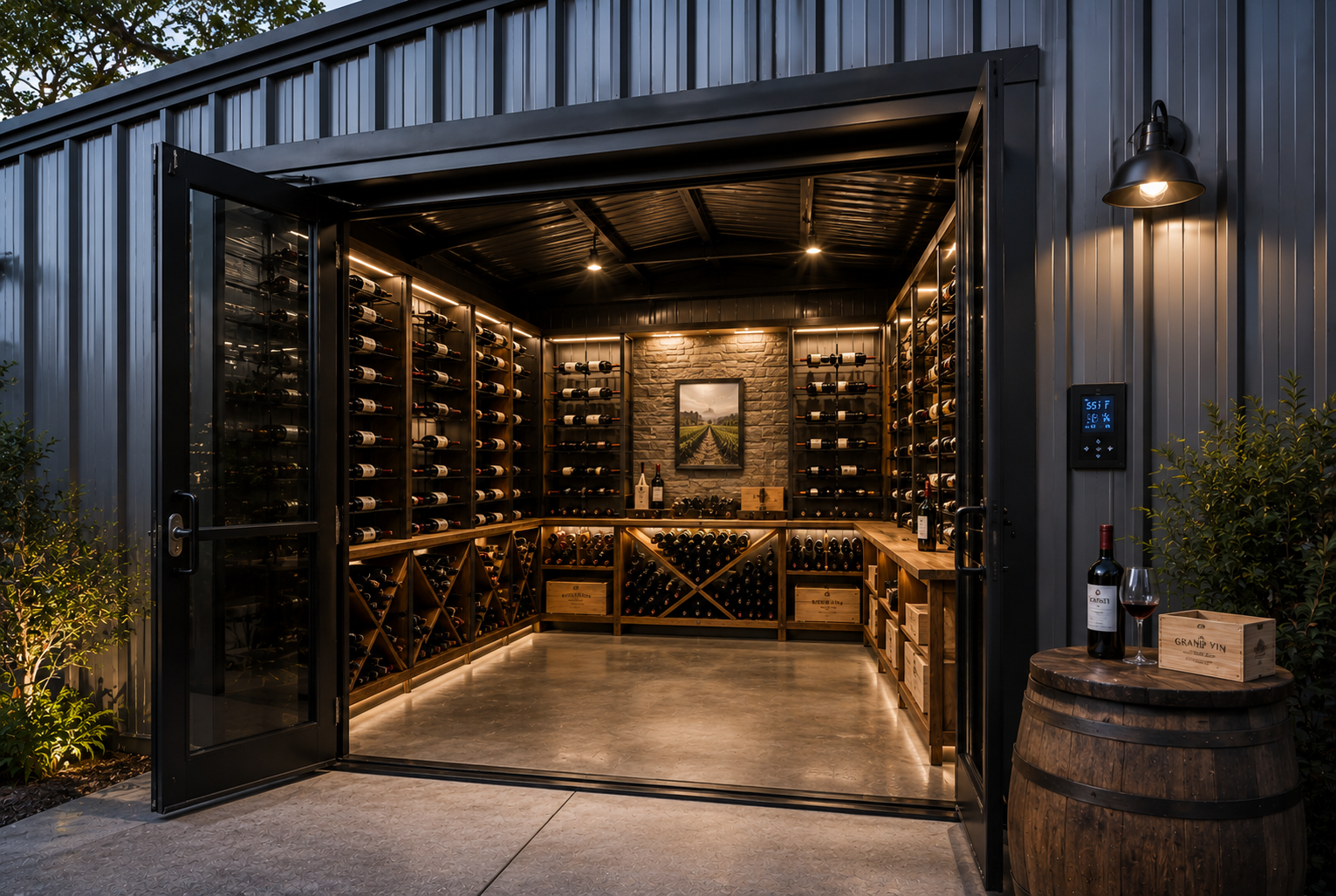
Wine is a living product. Its flavors evolve, but only under the right conditions. For enthusiasts, preserving wine requires more than a cool basement or a simple shelf. Temperature fluctuations, humidity inconsistencies, and exposure to light can all degrade quality and diminish the investment in fine bottles. A well-designed wine cellar ensures that wine ages gracefully and remains at peak enjoyment for years or decades.
Steel structures offer a unique opportunity for creating custom wine storage environments. Metal buildings are durable, secure, and highly adaptable. These qualities allow wine cellars to be constructed virtually anywhere. However, steel is highly conductive. That means without careful planning, it can amplify heat and cold rather than protect against them. Designing a climate-controlled metal wine cellar involves temperature management systems while creating an aesthetically pleasing environment that complements the collection.
Why Choose Steel for Wine Storage?
Steel provides strength and versatility unmatched by traditional materials. Its rigidity allows for clear-span interiors, offering uninterrupted space for racking and custom shelving. Unlike wood or masonry, steel resists pests, rot, and warping. This reliability ensures that long-term storage does not compromise the integrity of the structure.
Another advantage of steel is its adaptability. Prefabricated panels can be sized and shaped to accommodate unique site conditions. The material can support refrigeration equipment, specialized shelving, and even decorative finishes. While steel alone is not an ideal insulator, combining it with high-quality insulation and climate-control systems results in a robust and reliable wine storage environment. Security is also a consideration. Steel structures can be reinforced with lockable doors and secure windows, protecting valuable collections from unauthorized access.
How Does Climate Affect Wine Preservation?
Wine is sensitive to environmental conditions. Temperature fluctuations accelerate chemical reactions that can spoil the flavor profile of stored bottles. Ideally, wine should be stored at a consistent temperature, typically between 50 and 59 degrees Fahrenheit. Sudden changes can expand and contract the liquid inside the bottle, potentially pushing corks or causing seepage.
Humidity is equally important. Low humidity dries out corks, allowing oxygen to enter bottles and compromise the wine. Excessive humidity, on the other hand, encourages mold growth and can damage labels. Maintaining an ideal humidity range of forty-five to seventy percent preserves both the wine and its packaging. Light exposure is also a concern; ultraviolet rays break down organic compounds in wine, altering taste and aroma. Steel, with proper insulation and interior treatments, can block light and stabilize internal conditions.
What Insulation Strategies Work Best in Metal Wine Cellars?
Because steel conducts heat efficiently, insulation is a critical component. High-performance foam panels or spray foam insulation create a thermal barrier that reduces temperature fluctuation. Closed-cell spray foam also prevents moisture infiltration, ensuring that condensation does not form on the interior walls.
Insulating the floor, walls, and ceiling provides uniform protection. Some designers incorporate additional radiant barriers to reflect heat away from storage areas. Vapor barriers may be added to prevent moisture from penetrating insulation and creating mold or corrosion. The effectiveness of the insulation directly impacts the efficiency of the refrigeration or climate-control system, reducing energy consumption while maintaining ideal wine storage conditions.
How Should Temperature Control Systems Be Integrated?
Climate-controlled wine cellars rely on refrigeration units or HVAC systems to maintain consistent temperatures. Placement of the equipment is essential. Units should be positioned to distribute cool air evenly throughout the storage space without generating excessive airflow that could disturb labels or corks.
Sensors and thermostats monitor conditions continuously, allowing adjustments in response to seasonal changes or unexpected heat gains. For larger collections, zoned systems enable temperature variation between sections, accommodating different types of wine that may require distinct storage conditions. Integration with insulation and ventilation ensures that the cooling system operates efficiently, preventing hot or cold spots that could damage the wine.
How Can Humidity Be Controlled in Metal Structures?
Metal buildings tend to dry out faster than masonry structures, creating a challenge for humidity retention. Humidifiers may be integrated into the climate-control system to maintain the recommended moisture level. Placement of humidifiers should allow even distribution, avoiding localized wet areas that could promote mold.
Dehumidifiers are necessary in regions with high ambient moisture or in cases where external humidity infiltrates the building. Proper sealing of doors, windows, and joints minimizes unwanted moisture transfer. The combination of insulation, vapor barriers, and active humidity control maintains an environment that protects both cork integrity and bottle labels.
How Can Lighting Be Managed Without Affecting Wine Quality?
Wine is extremely sensitive to light, particularly ultraviolet rays, which can degrade the chemical compounds responsible for flavor and aroma. For steel wine cellars, lighting design must balance visibility and preservation.
LED lighting is often preferred due to its low heat emission and minimal UV output. Placement of lights should avoid direct exposure to bottles. Recessed or accent lighting can illuminate shelving without impacting stored wine. Motion-activated switches reduce the time that lights are on, further protecting sensitive bottles. Integrating dimmable or strategically placed lights creates a functional and visually appealing environment while preserving quality.
What Design Considerations Enhance Storage Capacity?
Steel structures offer flexibility in maximizing storage. Clear-span interiors allow for floor-to-ceiling racking systems, including high-density mobile racks or traditional fixed shelving. Adjustable shelves accommodate bottles of varying sizes, including magnums and large-format formats.
Vertical space can be exploited without compromising air circulation. Overcrowding can restrict airflow and compromise climate control. Modular racking solutions enable collectors to reconfigure layouts as their collection grows. Steel construction supports heavy loads, allowing for dense storage without structural concerns.
How Can Security Be Integrated Into a Metal Wine Cellar?
Steel buildings inherently provide strong security due to their rigidity and resistance to forced entry. Reinforced doors with lockable hardware enhance safety, while limited window openings reduce vulnerability. Advanced systems may include alarms, video surveillance, and access control for high-value collections.
Integration of security measures should not interfere with climate control. Doors and panels must be sealed to maintain temperature and humidity, even while providing robust protection. Proper planning ensures that security measures and storage requirements function seamlessly together.
How Can Interior Finishes Enhance Both Function and Aesthetics?
The interior design of a wine cellar affects both practicality and visual appeal. Wooden shelving, metal racks, or a combination can create a warm and inviting environment. Wood offers a traditional aesthetic while metal racks provide modern, minimalist appeal.
Wall and ceiling finishes can complement shelving while resisting moisture and maintaining thermal stability. Decorative finishes, such as textured panels or stone accents, create visual interest without compromising climate control. Attention to finishes ensures that the wine cellar functions as both a storage space and a showcase for the collection.
Can Technology Assist With Climate Monitoring?
Modern wine cellars benefit from integrated monitoring systems. Sensors can track temperature, humidity, and even light exposure in real time. Alerts can be sent to mobile devices or computers, providing immediate feedback if conditions deviate from desired ranges.
Data logging allows collectors to analyze trends over time and make proactive adjustments. Advanced systems may integrate with HVAC or humidification equipment to automatically correct environmental changes. Technology ensures consistency and peace of mind, particularly for large or high-value collections.
What Are Common Installation Challenges in Metal Wine Cellars?
Constructing a climate-controlled steel wine cellar involves addressing several challenges. Thermal bridging, where heat transfers through metal components, can undermine insulation performance. Proper placement of insulation and vapor barriers mitigates this risk.
Condensation management is critical, especially where exterior temperatures differ greatly from the controlled interior. Sealing joints and monitoring humidity prevent mold or corrosion. Integrating mechanical systems into a metal structure requires careful planning to maintain efficiency and avoid interference with storage layouts.
How Can Wine Be Displayed Without Compromising Conditions?
Displaying wine requires balancing accessibility and environmental protection. Glass-front cabinets can showcase bottles while providing insulation and UV protection. Shelving can be angled or recessed to prevent light exposure to labels.
Rotation of bottles for tasting or aesthetic purposes must be managed to avoid disrupting the internal climate. Careful display planning allows collectors to enjoy the visual appeal of their collection while maintaining optimal storage conditions.
How Can a Wine Cellar Evolve With a Collection?
As a collection grows, flexibility in design is essential. Modular shelving, adjustable racks, and scalable climate control systems allow expansion without compromising stability or environmental performance.
Planning for future growth ensures that the cellar can accommodate increased inventory, larger bottles, or specialized storage areas. Adaptability enhances long-term value and usability.
How Does Steel Compare to Traditional Wine Cellar Materials?
Steel differs significantly from masonry or wood, offering both advantages and unique challenges. It provides unmatched structural strength, durability, and flexibility in shaping interior layouts. Unlike wood, steel does not warp or attract pests.
However, its high thermal conductivity requires more deliberate insulation and climate management. With proper design, steel wine cellars perform as well or better than traditional materials, especially when security, customization, and site flexibility are priorities.
What Maintenance Practices Ensure Long-Term Performance?
Maintaining a steel wine cellar involves periodic inspection of climate control systems, insulation, and structural components. Checking seals, vapor barriers, and refrigeration units ensures consistent conditions.
Cleaning shelving, finishes, and floors prevents dust accumulation, which can affect airflow and equipment efficiency. Routine monitoring of environmental data allows early detection of deviations, preserving wine quality over decades.
Conclusion
Designing a climate-controlled wine cellar within a steel structure combines engineering precision with aesthetic considerations. Steel provides the strength, security, and flexibility required for modern wine storage, while insulation, ventilation, and climate control maintain ideal conditions for preservation. Integrating humidity management, lighting control, and modular racking creates a functional and visually appealing space.
With careful planning, technology integration, and attention to detail, steel wine cellars can rival or surpass traditional materials in performance and durability. They offer collectors the ability to store, showcase, and protect their investment for years to come. A thoughtfully executed metal wine cellar ensures that each bottle reaches its full potential, delivering exceptional flavor and value across decades of careful aging.