
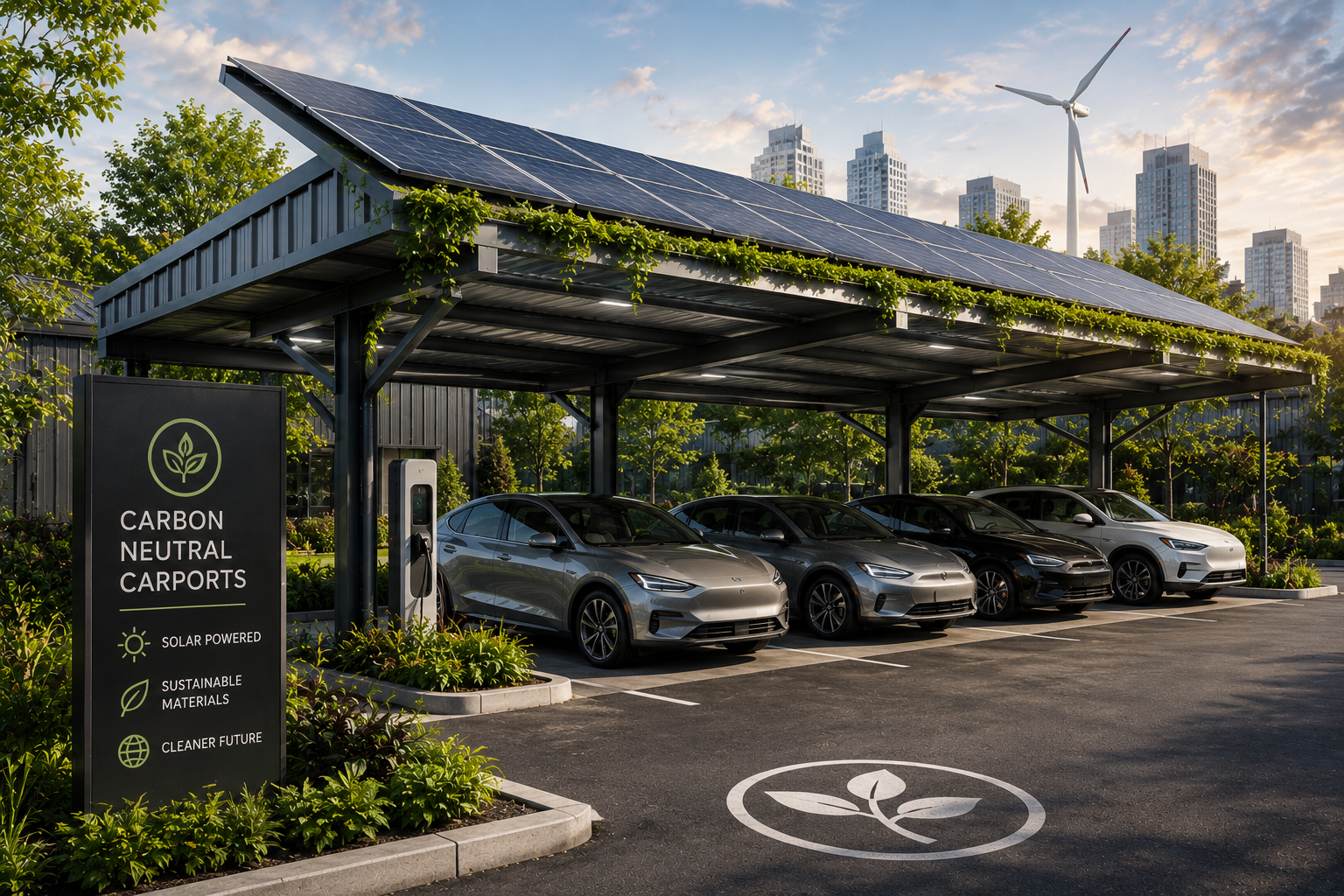
Metal carports have long been valued for their strength, affordability, and adaptability. They not only protect vehicles but can also be customized to complement a wide range of architectural styles. As sustainability becomes central to modern construction, these once-simple structures are evolving into something more innovative. Designers are reimagining the carport as a platform for responsible material use.
Carbon neutrality is no longer a concept limited to large commercial developments. Community planners are seeking practical ways to reduce environmental impact at every scale. The metal carport presents an unexpected opportunity to contribute to climate-conscious living. A carbon-neutral carport can protect vehicles while generating clean energy, offsetting emissions, and demonstrating how small structures can make a meaningful difference.
What Does Carbon Neutral Mean in the Context of Carports?
Carbon neutrality refers to achieving a balance between the carbon dioxide emitted during a product’s lifecycle and the carbon dioxide removed or offset through sustainable practices. In the case of a carport, this involves evaluating emissions associated with material production, transportation, construction, maintenance, and eventual disposal. The goal is to reduce those emissions as much as possible and compensate for any remaining footprint through renewable energy production or verified offsets.
For metal carports, the lifecycle assessment begins with steel manufacturing. Steel production has historically been energy-intensive, but advancements in recycling and cleaner energy sources are reshaping the industry. A carbon-neutral carport incorporates recycled steel, low-emission fabrication methods, and efficient transportation planning. Designers must also consider how the structure performs during its lifespan. A carport that generates renewable energy can offset far more carbon than was emitted during its production.
Achieving neutrality requires a comprehensive approach rather than a single feature. Energy generation, material sourcing, and operational efficiency must work together to create a measurable environmental impact.
How Can Solar Integration Transform Metal Carports?
Solar panels represent one of the most visible features of carbon-neutral carports. The flat or gently sloped roof of a metal structure provides an ideal platform for photovoltaic systems. Instead of functioning solely as a shelter, the carport becomes a renewable energy generator.
Solar-integrated carports can power residential homes, commercial facilities, or electric vehicle charging stations. Excess energy may be stored in battery systems or fed back into the grid, depending on local regulations. The energy generated over time can offset the emissions associated with manufacturing the structure itself.
Design considerations include roof orientation, tilt angle, and shading analysis. Proper alignment maximizes solar exposure and energy output. Structural reinforcements ensure that the frame supports panel weight and wind loads without compromising safety. Integration must be seamless to maintain both durability and aesthetic appeal.
The combination of steel durability and solar technology positions metal carports as practical energy assets rather than passive structures.
Why Is Recycled Steel Essential for Carbon Neutral Design?
Steel is one of the most recycled materials in the world. Using recycled steel significantly reduces energy consumption compared to producing new steel from raw ore. Electric arc furnace technology allows manufacturers to melt scrap steel and reshape it into new structural components with lower emissions.
Selecting high-recycled-content steel for carport construction reduces embodied carbon. Manufacturers who source locally also minimize transportation emissions. These practices contribute to the overall sustainability profile of the project.
Durability further enhances environmental performance. Steel carports can last decades with minimal maintenance. A long lifespan spreads initial carbon emissions across many years of use. This longevity contrasts with materials that require frequent replacement or generate construction waste.
Carbon-neutral design relies on both reduced embodied emissions and extended service life. Recycled steel supports both objectives.
Can Energy Storage Enhance Carbon Neutral Performance?
Energy storage systems allow carports to maximize the benefits of solar integration. Batteries capture surplus electricity generated during peak sunlight hours. Stored energy can then power lighting, security systems, or electric vehicle chargers during evenings or cloudy periods.
Energy storage increases self-sufficiency and resilience. In regions prone to grid instability or extreme weather, a solar-powered carport with battery backup provides reliable energy access. This feature aligns with broader sustainability goals that emphasize resilience and adaptability.
Designers must allocate protected space for battery systems and ensure proper ventilation and safety compliance. Integration should maintain structural simplicity while enhancing functional capacity.
Energy storage strengthens the case for carports as active participants in a carbon-conscious infrastructure network.
How Do Electric Vehicle Chargers Complement Carbon Neutral Carports?
Electric vehicles represent a growing segment of the transportation market. Pairing carports with EV charging stations reinforces the sustainability narrative. A solar-powered carport can charge vehicles using renewable energy generated onsite.
This configuration reduces reliance on fossil-fuel-based electricity. It also encourages the adoption of cleaner transportation options. Commercial properties may attract environmentally conscious customers or employees by offering covered charging spaces.
Structural design must account for conduit routing and charger placement. Accessibility standards and local electrical codes guide installation. The integration of charging infrastructure transforms a simple shelter into a sustainable mobility hub.
The synergy between renewable energy and electric transportation amplifies the carbon reduction potential of the structure.
What Role Does Smart Monitoring Play in Sustainability?
Smart monitoring systems track energy production, consumption, and system performance. Real-time data allows owners to evaluate how effectively the carport offsets emissions. Monitoring also identifies maintenance needs before they escalate into costly repairs.
Digital dashboards display metrics such as kilowatt-hour generation, carbon savings, and battery charge levels. These insights encourage informed decision-making and long-term optimization. In commercial settings, transparent reporting supports corporate sustainability goals.
Integrating smart technology into carport design requires minimal additional infrastructure. Sensors and inverters can be housed discreetly within the structure. Data connectivity enhances accountability and supports continuous improvement.
Accurate measurement reinforces the credibility of carbon-neutral claims.
How Can Passive Design Reduce Environmental Impact?
Passive design strategies enhance sustainability without relying solely on technology. Strategic orientation reduces wind resistance and maximizes natural ventilation. Reflective roof coatings minimize heat absorption, reducing the heat island effect in urban areas.
Rainwater collection systems may be integrated into the roofline. Collected water can irrigate landscaping or support non-potable uses. This reduces demand on municipal water supplies.
Landscaping around the carport can further support environmental goals. Native plants require less irrigation and promote biodiversity. Permeable paving beneath the structure allows stormwater infiltration, reducing runoff.
Passive features complement active systems such as solar panels, creating a holistic sustainability strategy.
Are Carbon Offsets Necessary for True Neutrality?
Even with renewable energy generation and recycled materials, some carbon emissions remain unavoidable. Transportation, manufacturing, and installation contribute to the overall footprint. Verified carbon offsets can compensate for these residual emissions.
Offsets may fund reforestation projects, renewable energy installations, or methane capture initiatives. Transparency and third-party verification are critical to ensure credibility.
Purchasing offsets should not replace emission reduction efforts. Offsets function as a final step in achieving neutrality after all feasible reductions have been implemented.
Combining responsible design with verified offsets completes the pathway toward carbon-neutral carport construction.
How Do Building Codes Influence Sustainable Carport Design?
Local building codes and energy regulations shape implementation. Some regions encourage renewable integration through tax incentives or streamlined permitting. Others require specific structural reinforcements for wind or snow loads.
Compliance ensures safety and long-term viability. Working with engineers familiar with local requirements simplifies approval processes. Sustainable features must align with structural integrity standards.
Municipal incentives may improve financial feasibility. Property owners should evaluate available rebates for solar installations or energy storage systems.
Understanding regulatory frameworks supports efficient project execution.
Can Modular Construction Support Carbon Neutral Goals?
Modular construction reduces material waste and shortens installation time. Pre-fabricated components manufactured in controlled environments enhance precision and efficiency. Reduced onsite labor lowers transportation and fuel consumption.
Modules can be transported in optimized configurations to minimize emissions. Standardized designs allow for repeatability and scalability. When expansion becomes necessary, additional modules can integrate seamlessly without extensive demolition.
Modular approaches align with sustainable construction principles that prioritize efficiency and adaptability.
What Financial Considerations Influence Adoption?
Initial investment in solar panels, energy storage, and advanced coatings may exceed the cost of a standard carport. Long-term savings from energy generation and reduced utility bills offset higher upfront expenses.
Incentives and tax credits improve affordability. Energy cost projections help evaluate return on investment. Commercial installations may achieve payback more quickly due to higher energy demand.
Financing options tailored to renewable energy projects provide additional flexibility. Financial analysis must consider both environmental impact and economic sustainability.
Balanced evaluation ensures that carbon-neutral design remains practical rather than aspirational.
How Does Design Aesthetics Support Market Appeal?
Sustainable design does not require sacrificing visual appeal. Modern metal carports feature clean lines and customizable finishes. Solar panels can be integrated flush with roofing systems for a streamlined appearance.
Color selection influences heat reflection and architectural harmony. Curved roof profiles soften the industrial character of steel framing. Lighting integrated into support beams enhances safety and ambiance.
Aesthetic refinement increases market acceptance. Sustainability becomes an attractive feature rather than a compromise.
What Challenges Must Be Addressed?
Carbon-neutral carports face practical challenges. Upfront cost remains a barrier for some property owners. Technical expertise is required to integrate renewable systems effectively.
Weather exposure influences long-term performance. Coastal environments demand corrosion-resistant coatings. Snow-prone regions require structural reinforcement.
Maintenance must be planned carefully. Solar panels need periodic cleaning to maintain efficiency. Monitoring systems require occasional updates.
Addressing these challenges through careful planning and professional consultation ensures reliable performance.
Why Are Carbon Neutral Carports the Future of Metal Design?
Metal structures have always represented durability and adaptability. Incorporating sustainability transforms them into symbols of responsible innovation. Carbon-neutral carports reflect a broader shift toward decentralized energy production and environmentally conscious construction.
As communities seek practical ways to reduce emissions, small-scale infrastructure becomes increasingly important. Carports occupy space that might otherwise remain unused. Turning that space into a renewable energy platform amplifies its value.
Innovation continues to expand possibilities. Advances in steel manufacturing, solar efficiency, and energy storage promise even greater impact in the coming years. Designers, manufacturers, and property owners share responsibility for embracing these opportunities.
Carbon-neutral carports demonstrate that sustainability can be integrated into everyday structures. They represent the next frontier in metal design because they align strength, functionality, and environmental responsibility. Through thoughtful planning and technological integration, these structures protect vehicles while contributing to a cleaner and more resilient future.