
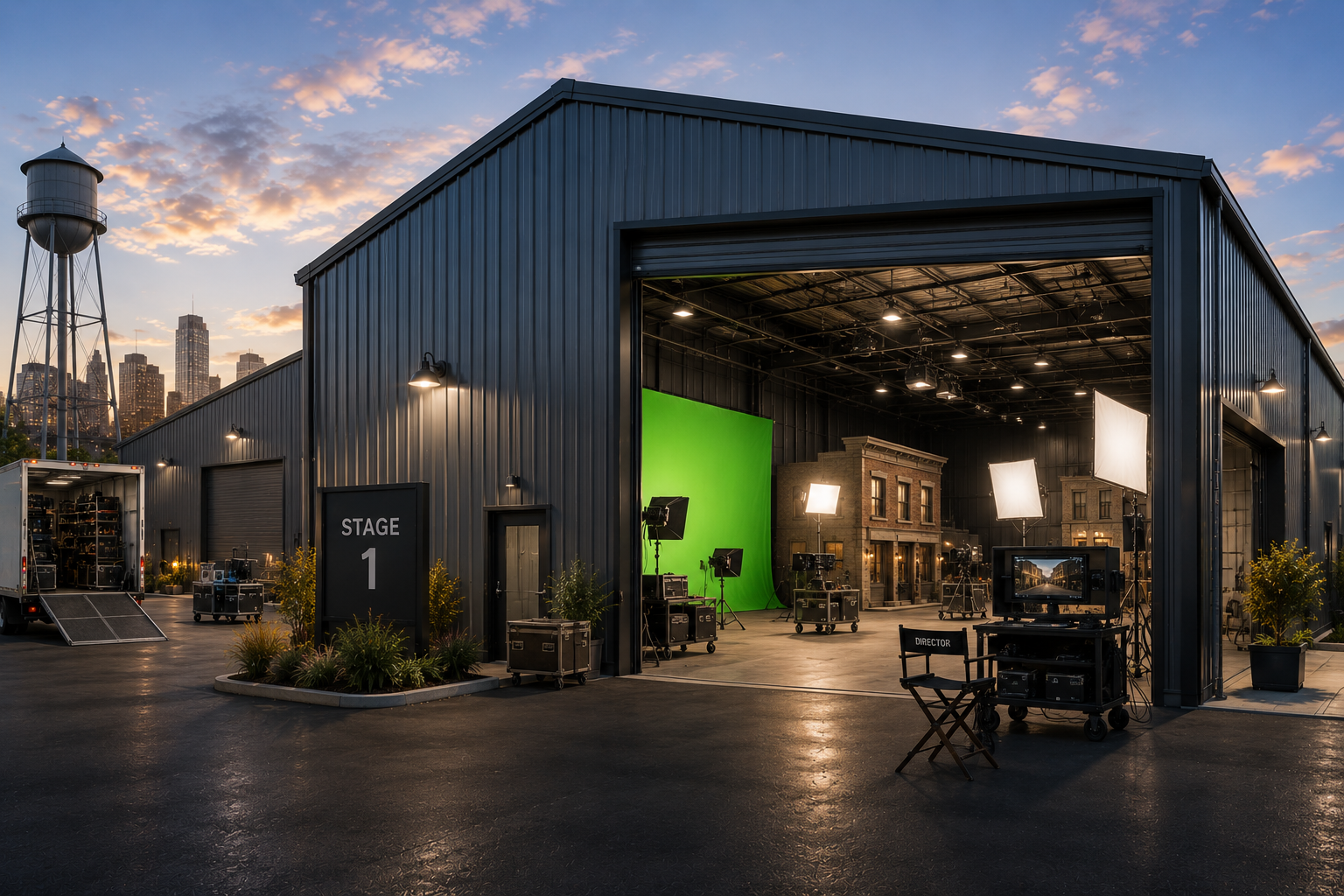
Film production has evolved into a complex blend of creativity, technology, and logistics. Choosing the right production space is a critical component of bringing creative visions to life. Traditional studios offer controlled environments, but they can be costly and inflexible for smaller productions or emerging filmmakers. Steel buildings have emerged as a versatile alternative, offering durability, scalability, and customization that align with the unique demands of film production.
Steel buildings are not just functional structures; they are adaptable platforms that can support lighting, soundproofing, set construction, and post-production workflows. Their structural integrity allows for wide open interiors, high ceilings, and flexible layouts, which are essential for large sets and elaborate filming requirements. As filmmaking continues to expand into new markets and independent studios seek affordable yet professional spaces, steel buildings are becoming an increasingly attractive solution for both creative and logistical needs.
Why Are Steel Buildings Ideal for Film Production?
Steel buildings provide structural strength and long spans without internal load-bearing walls, allowing filmmakers to create large sets without obstruction. The modular nature of steel construction also enables easy expansion or reconfiguration of studio spaces as production needs evolve.
Durability is another critical advantage. Steel resists fire, pests, and environmental wear, reducing risks to expensive equipment, props, and sets. These factors make steel buildings a reliable investment for production companies looking to maintain consistent quality and operational continuity.
How Can Steel Buildings Be Configured for Soundproofing?
Acoustic control is essential in film production to prevent unwanted noise from interfering with recordings. Steel buildings allow the installation of soundproof panels, insulation, and isolation systems. Interior framing can support walls and ceilings designed specifically for noise reduction.
Vibration isolation techniques, such as floating floors and decoupled walls, can also be integrated into steel structures. Proper acoustic planning during the design stage ensures that the building supports professional-grade audio recording, even in urban or industrial environments.
What Design Features Support Large-Scale Sets?
High ceilings and wide spans are necessary for constructing elaborate sets. Steel beams and trusses provide the flexibility to achieve vertical and horizontal space requirements without additional support columns.
Movable partitions and modular walls can create multiple filming zones within a single building. This allows simultaneous production activities, optimizing time and resources while maintaining creative flexibility.
How Do Steel Buildings Facilitate Lighting and Rigging?
Professional film productions require complex lighting setups. Steel structures can support heavy lighting rigs, cranes, and other equipment safely. Overhead beams and reinforced attachment points allow for suspension of lighting, cameras, and scenery without compromising structural integrity.
The adaptability of steel framing also permits the installation of catwalks and mounting platforms, enabling crews to work efficiently and safely at elevated positions. These capabilities streamline production while maintaining a secure environment for crew and equipment.
How Can Climate Control Be Managed in Steel Studios?
Maintaining stable temperatures is vital for both comfort and equipment protection. Steel buildings can be outfitted with HVAC systems that regulate temperature and humidity. Insulated panels reduce heat gain in summer and heat loss in winter, enhancing energy efficiency.
Ventilation is equally important to prevent condensation, which can damage electronic equipment or delicate set materials. Designing climate control systems during construction ensures consistent environmental conditions throughout the studio.
Are Steel Buildings Cost-Effective for Independent Filmmakers?
Steel buildings often have lower initial costs compared to traditional concrete or brick studios. Prefabricated panels reduce labor requirements, and faster construction timelines allow production to begin sooner.
Long-term maintenance is minimal, as steel resists decay and requires less upkeep than wood or masonry. This combination of affordability, durability, and flexibility makes steel buildings a viable option for independent filmmakers seeking professional-quality facilities on limited budgets.
How Do Steel Studios Adapt to Specialized Production Needs?
Film production involves a variety of specialized areas, including green screens, motion capture, sound stages, and post-production suites. Steel buildings can be customized to accommodate these functions.
Movable walls, modular flooring, and reinforced ceilings allow for rapid reconfiguration. Interior spaces can be partitioned for editing rooms, makeup and wardrobe areas, or equipment storage. The versatility of steel construction ensures that studios can evolve with changing production requirements.
What Role Does Natural and Artificial Lighting Play?
Steel buildings provide flexibility in integrating natural and artificial lighting. Large windows, skylights, and translucent panels allow controlled daylight while maintaining insulation and soundproofing.
Artificial lighting systems can be mounted on trusses, rails, or ceiling grids. The combination of natural and artificial light options enhances creative possibilities and ensures that productions maintain visual consistency regardless of external conditions.
Can Steel Studios Support Large Equipment and Vehicles?
Film productions often involve heavy props, vehicles, and large machinery. Steel buildings can support these loads with reinforced floors and wide-access doors. High clearance doors allow trucks, trailers, and specialty equipment to enter the studio safely.
The structural integrity of steel ensures that even intensive production activity, including the movement of cranes or elevated platforms, does not compromise safety or longevity. This makes steel studios suitable for action sequences, automotive shoots, or industrial sets.
How Can Steel Studios Incorporate Sustainability?
Sustainable practices are increasingly important in film production. Steel is highly recyclable, reducing the environmental impact of construction. Insulated panels, energy-efficient HVAC systems, and solar energy integration further enhance sustainability.
Water management, such as rainwater collection for set cooling or landscaping, can also be included. Eco-friendly building practices not only reduce operational costs but also align studios with industry trends toward environmental responsibility.
How Do Location and Accessibility Influence Steel Studio Planning?
Proximity to talent, crew, and transportation networks impacts operational efficiency. Steel buildings can be erected in diverse locations, including rural areas where land is more affordable or industrial zones near infrastructure.
Ample parking, loading areas, and access roads are essential for crew, equipment, and production vehicles. Planning site logistics ensures smooth daily operations and reduces delays caused by transportation challenges.
How Does Modular Construction Benefit Film Studios?
Prefabricated steel components allow for modular construction, enabling rapid assembly and scalability. Studios can start small and expand as production needs grow.
Modules can be repurposed for different uses, such as converting storage areas into sound stages or office space. This flexibility is particularly valuable for productions with fluctuating budgets or changing project scopes.
What Security Measures Are Needed in Steel Studios?
Protecting equipment, props, and intellectual property is critical. Steel buildings provide a secure structure that can incorporate advanced security systems. Reinforced doors, access control systems, surveillance cameras, and alarm systems safeguard both physical assets and sensitive production information.
Security planning must also consider emergency exits, fire suppression systems, and safe evacuation protocols. Ensuring that safety and security measures are integrated into the design protects both personnel and investment.
How Can Workflow Be Optimized in a Steel Studio?
Efficient workflow requires careful spatial planning. Studios need separate areas for filming, editing, wardrobe, makeup, equipment storage, and administrative tasks.
Steel buildings allow open layouts or modular partitions to support the smooth movement of crew and equipment. Logical placement of facilities reduces time wasted in transit between sets and support areas, enhancing productivity.
What Acoustic Considerations Are Essential?
Sound quality is critical in film production. Steel buildings require careful acoustic treatment to prevent echo, vibration, and external noise intrusion. Acoustic panels, bass traps, and isolation mounts improve audio fidelity.
Planning acoustics during construction is more effective than retrofitting. Steel’s rigidity can amplify noise, so integrating soundproofing in walls, ceilings, and doors ensures a professional recording environment.
How Can Interior Design Enhance Creativity?
Studio interiors should support creative processes. Flexible lighting grids, adjustable walls, and neutral backgrounds allow filmmakers to adapt sets quickly. Open spaces encourage collaboration and movement of the crew and actors.
Color schemes, flooring, and ceiling treatments can influence mood and productivity. Thoughtful interior design maximizes both comfort and creative potential, creating an environment that inspires high-quality production work.
How Does Climate Adaptation Affect Steel Studio Design?
Studios must withstand local climate conditions, whether hot, cold, humid, or storm-prone. Steel buildings can be insulated, ventilated, and reinforced to meet specific environmental challenges.
Designing with climate in mind ensures that interior conditions remain stable for equipment, sets, and personnel. Temperature, humidity, and airflow control are critical for protecting delicate electronics, props, and film stock.
Can Steel Studios Support Post-Production Needs?
Post-production involves editing, sound mixing, and visual effects. Steel buildings can incorporate dedicated rooms with soundproofing, network infrastructure, and controlled lighting.
Integration of high-speed internet, server rooms, and workstations ensures smooth collaboration. A well-designed studio allows production and post-production to coexist efficiently under one roof.
How Do Steel Studios Compare Financially to Traditional Facilities?
Steel buildings typically offer lower upfront costs, faster construction timelines, and reduced long-term maintenance compared to concrete or brick studios. Operational efficiency and durability further enhance return on investment.
The flexibility to expand or reconfigure interiors reduces future renovation costs. For filmmakers, cost savings can be redirected into production quality, equipment upgrades, or additional creative projects.
How Can Future-Proofing Be Achieved?
Future-proofing ensures the studio remains relevant as technology and production requirements evolve. Steel buildings allow for structural modifications, expanded electrical systems, and adaptable layouts.
Planning for future growth during construction minimizes disruption and cost. Studios designed with scalability in mind can accommodate new technologies, larger productions, and changing creative demands without requiring complete rebuilding.
Conclusion
Steel buildings provide a robust and versatile solution for film production studios. Their structural integrity, long spans, and adaptability support diverse filming requirements, from sound stages to post-production suites. Acoustic treatment, climate control, and lighting infrastructure can be integrated seamlessly into the design, creating professional-grade environments that meet modern production standards.
Cost-effective construction, minimal maintenance, and modular adaptability make steel buildings appealing for independent filmmakers, emerging studios, and large production companies alike. Incorporating security, workflow planning, and creative interior design ensures that these structures not only protect assets but also foster productivity and innovation. As filmmaking continues to expand in scale, technology, and geographic reach, steel buildings represent the next frontier in creating functional, durable, and efficient studio spaces.