
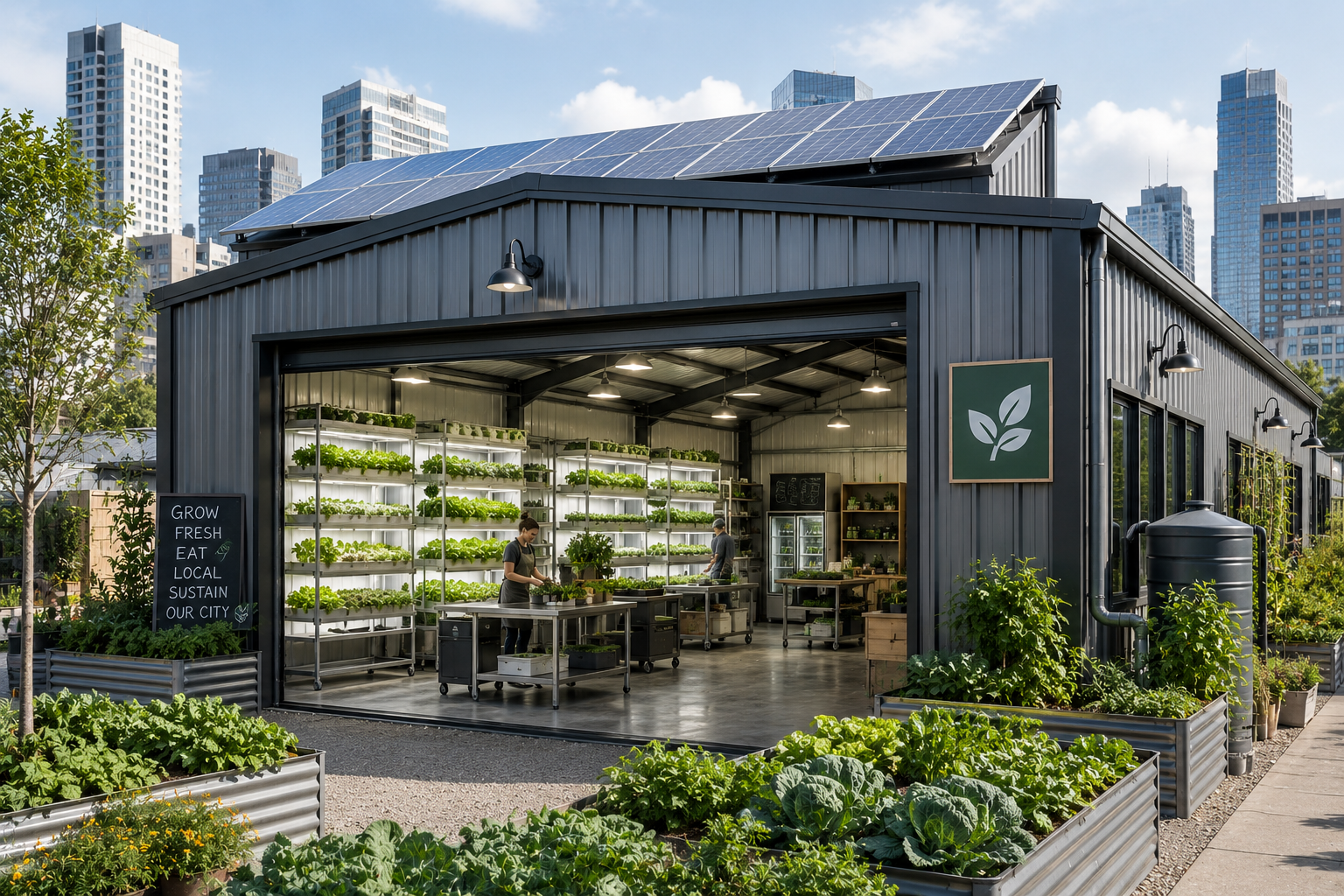
Cities around the world are searching for practical ways to produce food closer to where people live. Urban populations continue to grow, while arable land near city centers becomes increasingly scarce. Transportation costs, supply chain disruptions, and environmental concerns have prompted renewed interest in localized agriculture. Against this backdrop, metal buildings have emerged as flexible structures capable of supporting innovative farming models within urban environments.
Steel-framed structures once associated primarily with warehouses are now being reimagined as vibrant centers of food production. Their adaptability makes them well-suited for vertical farms, hydroponic systems, and community-supported agriculture programs. With careful planning and thoughtful design, metal buildings can serve as sustainable urban farming hubs that reduce environmental impact while strengthening food security and local economies.
How Can Urban Farming Address Food Security Challenges?
Urban farming reduces reliance on distant agricultural regions. Food grown within city limits shortens supply chains and lowers transportation emissions. Fresh produce can reach consumers more quickly, improving quality and nutritional value.
Local production also enhances resilience during disruptions. Severe weather, geopolitical tensions, or transportation delays can interrupt conventional supply chains. Urban farming hubs located in metal buildings create alternative sources of essential produce, ensuring that communities retain access to fresh food even during crises.
What Types of Farming Systems Work Best Inside Metal Structures?
Hydroponics, aeroponics, and aquaponics are well-suited for controlled indoor environments. These systems rely on water-based nutrient solutions rather than soil, allowing precise management of plant growth conditions. Vertical farming configurations maximize output within limited floor space, making them particularly effective in urban settings.
Traditional soil-based agriculture can also function in metal buildings when raised beds or container systems are installed. Climate control and lighting systems provide year-round growing capability. The adaptability of steel structures supports diverse agricultural models, enabling growers to select systems aligned with local demand and available resources.
How Can Climate Control Improve Crop Production?
Consistent temperature and humidity levels are essential for optimal plant growth. Insulated metal walls and roofing reduce heat transfer, stabilizing interior conditions. High-efficiency HVAC systems maintain appropriate temperature ranges regardless of external weather fluctuations.
Air circulation and filtration systems help prevent mold and disease. Automated controls allow growers to adjust environmental parameters in real time. These capabilities increase crop yield and quality while minimizing resource waste.
How Can Energy Efficiency Be Integrated Into Metal Farming Hubs?
Energy consumption can be significant in indoor farming due to lighting and climate control demands. Insulated panels, reflective roofing, and energy-efficient windows reduce heating and cooling loads. LED grow lights consume less electricity while delivering targeted light spectra for plant development.
Solar panels installed on metal roofs can offset a portion of energy use. Battery storage systems support operations during peak demand or grid outages. Integrating renewable energy sources enhances sustainability and lowers long-term operational costs.
How Can Water Conservation Be Achieved in Urban Metal Farms?
Water management is central to sustainable agriculture. Hydroponic and aquaponic systems recycle water, significantly reducing consumption compared to traditional soil farming. Closed-loop irrigation minimizes waste and prevents runoff.
Rainwater harvesting systems can collect water from metal roofs for use in irrigation. Filtration and purification systems ensure that water quality remains suitable for plant growth. Efficient water management conserves resources and reduces operational expenses.
How Can Structural Design Support Vertical Farming?
Vertical farming relies on stacked growing systems that increase output per square meter. Steel frames can support additional load from multi-tiered racks and suspended lighting systems. Open-span designs provide flexibility for tall installations.
Proper load calculations ensure structural integrity while accommodating equipment and plant weight. Reinforced flooring may be necessary to handle water tanks or heavy planters. Structural adaptability allows urban farmers to maximize productivity without compromising safety.
How Can Natural Light Be Utilized Effectively?
Metal buildings can incorporate skylights or translucent panels to introduce natural daylight. Strategic placement reduces reliance on artificial lighting during daylight hours. Light diffusion panels prevent harsh glare and distribute illumination evenly across crops.
Natural light improves plant growth and reduces energy costs. Combining daylight with LED systems creates balanced lighting conditions that support consistent production throughout the year.
How Can Urban Farming Hubs Strengthen Community Engagement?
Metal buildings can host educational workshops, farmers’ markets, and volunteer programs. Transparent sections or viewing galleries allow visitors to observe food production processes. These features foster awareness and appreciation for sustainable agriculture.
Community-supported agriculture programs encourage residents to invest in the farm’s success. Educational partnerships with schools or universities create opportunities for research and workforce development. Engagement strengthens social cohesion and promotes healthy eating habits.
How Can Technology Enhance Operational Efficiency?
Smart sensors monitor temperature, humidity, nutrient levels, and light intensity. Automated irrigation systems adjust water delivery based on plant needs. Data analytics platforms provide insights into crop performance and resource use.
Remote monitoring enables growers to manage operations efficiently and respond quickly to potential issues. Integrating digital tools reduces labor requirements and improves yield consistency. Technology transforms metal buildings into highly productive agricultural environments.
How Can Waste Be Managed Sustainably?
Urban farming operations generate plant waste, packaging materials, and nutrient byproducts. Composting organic waste within or adjacent to the facility recycles nutrients back into production cycles.
Aquaponic systems integrate fish and plant production, converting waste into valuable nutrients. Recycling programs and responsible sourcing further reduce environmental impact. Sustainable waste management aligns with the broader goals of urban agriculture.
How Can Zoning and Urban Planning Considerations Be Addressed?
Local zoning regulations influence where and how urban farms can operate. Metal buildings designed for agricultural use must comply with building codes and environmental standards. Consultation with planning authorities ensures compliance and smooth project approval.
Adaptive reuse of existing industrial buildings offers another pathway. Converting underutilized warehouses into farming hubs revitalizes neighborhoods and reduces construction waste. Thoughtful integration within urban planning frameworks enhances long-term viability.
How Can Financial Viability Be Ensured?
Initial investment includes structural construction, equipment installation, and technology integration. Operating costs encompass energy, labor, and maintenance. Revenue streams may include produce sales, educational programs, and partnerships with restaurants or retailers.
Efficient design and renewable energy integration reduce ongoing expenses. Diversified income sources strengthen financial resilience. Economic sustainability is essential for maintaining continuous production and community benefit.
How Can Urban Metal Farms Address Environmental Goals?
Localized food production reduces transportation emissions. Controlled environments limit pesticide use and runoff. Efficient water and energy systems minimize resource consumption.
Steel structures are recyclable and often contain recycled content. Designing for long-term adaptability reduces demolition waste. These factors align urban farming hubs with broader environmental sustainability objectives.
How Can Crop Diversity Be Supported Indoors?
Controlled environments allow growers to cultivate leafy greens, herbs, and specialty crops year-round. Adjustments in lighting and nutrient solutions enable experimentation with new varieties.
Crop rotation and staggered planting schedules maintain a consistent supply. Diverse offerings increase market appeal and resilience against crop-specific challenges. Flexibility in metal building layouts supports varied cultivation strategies.
How Can Urban Farming Contribute to Local Economies?
Metal farming hubs create employment opportunities in agriculture, technology, and logistics. Local sourcing supports nearby businesses and reduces dependency on external suppliers.
Collaboration with restaurants, grocery stores, and community markets strengthens economic networks. Urban farms can also attract investment and innovation, contributing to economic revitalization in underutilized districts.
How Can Resilience Be Built Into Urban Farming Infrastructure?
Resilient design anticipates power outages, extreme weather, and supply chain disruptions. Backup generators and battery storage maintain operations during grid failures. Reinforced steel frames withstand environmental stress.
Redundant systems for water and nutrient delivery reduce vulnerability to equipment malfunction. Planning for resilience ensures continuity of food production during challenging circumstances.
How Can Aesthetic Design Enhance Urban Acceptance?
Exterior finishes, landscaping, and transparent facades soften industrial appearances. Integrating green walls or rooftop gardens creates visual appeal and improves urban biodiversity.
Community-friendly design fosters acceptance and pride. Attractive facilities demonstrate that agriculture and urban life can coexist harmoniously. Visual integration enhances the social sustainability of the project.
How Can Education and Innovation Thrive in These Spaces?
Metal buildings provide controlled environments suitable for research and experimentation. Partnerships with universities support studies in plant science, renewable energy, and environmental engineering.
Innovation hubs within farming facilities encourage startups and technology developers to test new systems. Education and research expand the impact of urban agriculture beyond food production.
How Can Long-Term Sustainability Be Maintained?
Regular maintenance of structural components, HVAC systems, and irrigation infrastructure ensures consistent performance. Periodic evaluation of energy and water efficiency identifies opportunities for improvement.
Adaptability remains essential as technology evolves and urban needs change. Designing with flexibility allows facilities to incorporate new methods and equipment. Commitment to sustainability extends beyond initial construction, encompassing continuous improvement and community engagement.
Conclusion
Metal buildings have the potential to redefine urban agriculture. Their structural strength, adaptability, and compatibility with advanced technology make them ideal platforms for sustainable food production within city environments. Thoughtful integration of climate control, renewable energy, water conservation, and community engagement transforms these structures into dynamic hubs that address food security and environmental challenges.
Urban farming within steel-framed facilities strengthens resilience, reduces environmental impact, and fosters local economic growth. Carefully designed metal buildings can support diverse agricultural systems while remaining efficient and adaptable. As cities continue to evolve, sustainable urban farming hubs housed in metal structures offer a practical and forward-thinking solution for nourishing growing populations while protecting the planet.