
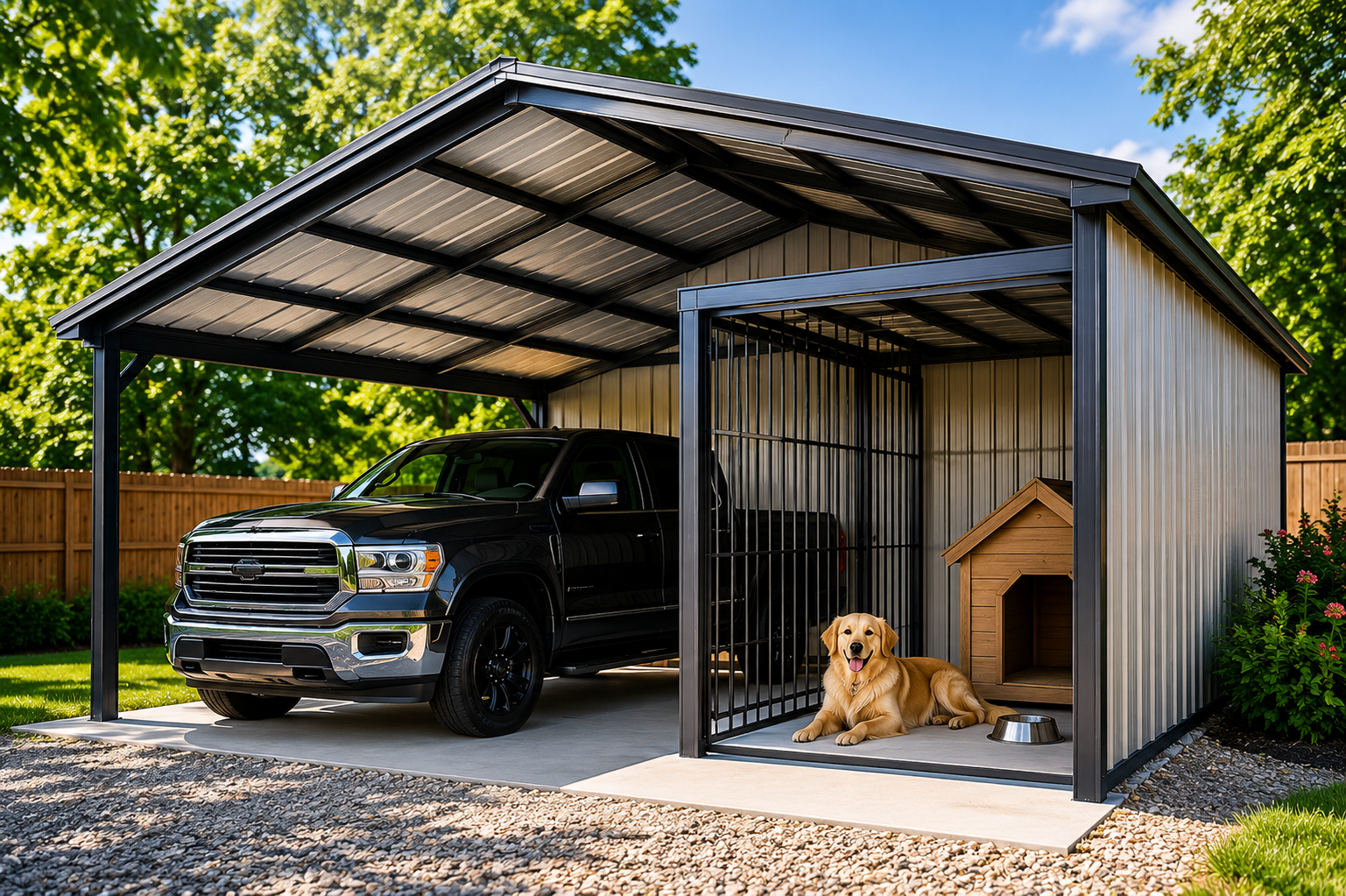
A metal carport can serve multiple purposes beyond vehicle protection. One particularly practical use is integrating a pet shelter within the carport structure. This dual-purpose approach maximizes space efficiency, ensures pets are protected from the elements, and allows homeowners to maintain a clean, organized yard without building separate structures.
Building a metal carport that doubles as a pet shelter requires careful planning and consideration of structural integrity, ventilation, safety, and comfort for pets. It is not simply a matter of attaching a kennel to the side of a carport. Properly designed, a metal carport can provide ample vehicle protection while offering a secure, weather-resistant area for pets to rest, play, and stay safe.
Why Combine a Carport and Pet Shelter?
Combining a carport with a pet shelter offers multiple practical benefits. Space efficiency is the most obvious, especially in yards where constructing separate structures is impractical or costly. By integrating both functions into one structure, homeowners can maximize the usability of limited outdoor space while avoiding clutter.
Beyond space-saving, combining these functions allows for shared structural advantages. A metal carport already provides a solid roof and protection from wind, rain, and sun, which can also benefit pets. Properly designed, the pet shelter area can remain dry, shaded, and secure without requiring additional construction. The combined structure also encourages centralized maintenance, as cleaning, repairs, and upgrades can be performed more efficiently.
What Are the Essential Planning Considerations?
Before construction begins, careful planning is critical to ensure that the carport-pet shelter combination meets both functional and safety requirements. The first consideration is the intended size and capacity of the structure. This includes determining how many vehicles will be housed and how many pets will use the shelter. Sufficient space must be provided for vehicle clearance, pedestrian access, and pet mobility.
Another key factor is local building codes and regulations. Some municipalities require permits for carports or structures over certain dimensions. Additionally, regulations may govern the housing of animals, including minimum space requirements, drainage considerations, and setback restrictions. Understanding these requirements before design and construction can prevent costly adjustments later.
Site location is another important planning element. The carport should be positioned on a level surface with proper drainage to prevent water accumulation. For the pet shelter area, orientation is important to ensure adequate sunlight in colder months and shade in warmer months. Consider wind patterns, rainfall direction, and proximity to noise sources to create a comfortable environment for pets.
How Should the Carport Structure Be Designed?
The structural design of the metal carport must account for both vehicle protection and pet shelter functionality. The frame should be sturdy enough to handle roof loads, including snow, rain, and wind, while allowing for open spaces where pets can move freely. Steel framing is typically preferred due to its strength, durability, and resistance to pests and rot.
Roof design is also crucial. A sloped roof facilitates water runoff, preventing accumulation that could compromise structural integrity or create leaks in the pet shelter area. The roof material should be corrosion-resistant, such as galvanized steel panels, to ensure long-term durability. Overhangs or extended eaves can provide additional shade and protection for pets, especially during extreme weather.
The layout should separate vehicle and pet areas while maintaining accessibility. Partial partitions or enclosed sections can keep pets safe without restricting airflow. If multiple pets will be housed, consider dividing the area into individual spaces or rooms to prevent overcrowding and ensure comfort.
What Materials Are Best for a Dual-Purpose Carport?
Material selection plays a significant role in the longevity, safety, and comfort of the carport-pet shelter combination. Steel is widely used for the main structure due to its strength and durability. Aluminum can be considered for lighter structures, but it may be less resilient under heavy loads.
Roof panels should be rust-resistant and strong enough to withstand local weather conditions. Galvanized steel or coated metal panels are ideal. For pet shelter walls, materials that are easy to clean, resistant to chewing, and provide insulation are preferred. Options include treated wood, PVC panels, or additional steel siding with interior insulation.
Flooring in the pet area should be safe, comfortable, and easy to clean. Concrete is durable and allows for thorough cleaning, while rubber mats or raised platforms can add comfort and insulation. Drainage solutions, such as sloped floors or small channels, help prevent water accumulation and maintain hygiene.
How Can Ventilation Be Ensured for Pets?
Proper ventilation is essential for the health and comfort of pets housed within the carport. Metal structures tend to retain heat, which can become dangerous during hot weather. Incorporating natural airflow through vents, louvered panels, or open sections can keep air circulating.
The use of roof vents or ridge vents allows hot air to escape, while side openings facilitate cross-ventilation. Adjustable panels or removable screens can provide flexibility, allowing airflow to be increased in summer and limited during cold weather. Fans may be added if natural ventilation is insufficient, particularly for larger enclosures or multi-pet facilities.
Insulation also contributes indirectly to ventilation efficiency. Proper insulation in the pet shelter walls or ceiling helps regulate temperature, reducing heat buildup and providing a comfortable environment year-round.
What Safety Measures Are Necessary for Pets?
Safety is paramount in any dual-purpose structure. Pets must be protected from sharp edges, loose panels, and potential hazards from vehicles. All exposed metal edges should be smoothed or capped, and wiring or utilities should be secured out of reach.
Partitions between vehicle and pet areas should be strong enough to prevent accidental entry or injury. Gates or doors should be secure, but easy for humans to operate, and locks should be child- and pet-proof. Non-slip flooring reduces the risk of injury, especially if the area becomes wet.
Fire safety must also be considered. While steel is non-combustible, other materials used in the pet area, such as wood or insulation, can burn. Smoke detectors, fire extinguishers, and safe electrical installations help mitigate risks. Proper spacing and access for emergency exits are essential, ensuring pets and humans can leave the area quickly if necessary.
How Can Comfort Be Maximized for Pets?
Creating a comfortable environment for pets requires attention to shelter, climate control, and enrichment. Providing shaded areas, elevated platforms, and bedding enhances physical comfort. Temperature regulation can be achieved with insulation, ventilation, or fans, while protection from wind and precipitation is handled by proper roof design and enclosed walls.
Noise reduction is another comfort factor. Vehicles entering or leaving the carport may startle animals, so buffers such as sound-absorbing panels or strategically placed partitions can reduce stress. Access to natural light and visibility of the surrounding environment also contribute to mental well-being.
The interior layout should allow pets to move freely and avoid overcrowding. Separate zones for rest, play, and feeding help maintain order and reduce stress. Incorporating modular furniture or play equipment allows the space to adapt as pets’ needs evolve.
What Utilities Should Be Considered?
Utilities can enhance both convenience and pet care within the carport. Electrical outlets are necessary for lighting, fans, or heating systems. Plumbing may be required for drinking water, cleaning, or even small bathing stations.
For pet areas, temperature control devices like heaters or cooling fans may be essential in extreme climates. Lighting should be sufficient for both pet safety and human visibility, with options for natural and artificial sources. Water drainage should be incorporated to prevent puddling or moisture accumulation, which could lead to mold or unhealthy conditions.
Electrical and plumbing systems must be installed safely and comply with building codes. All outlets should be grounded and protected against water exposure, while plumbing should be designed to minimize leaks and ensure easy maintenance.
How Can Maintenance Be Simplified?
Maintenance is a critical aspect of any dual-purpose structure. Easy-to-clean surfaces, accessible layouts, and durable materials reduce the time and effort required to keep the carport and pet shelter in good condition. Concrete or coated floors, removable partitions, and smooth wall surfaces facilitate cleaning and disinfecting.
Drainage systems should be designed to prevent standing water, and gutters or downspouts must be regularly inspected and cleaned. Roof panels should be periodically checked for corrosion, loose fasteners, or leaks, especially in the pet shelter area.
Routine maintenance also includes checking ventilation systems, inspecting gates and doors, and ensuring electrical systems are functioning safely. A well-maintained carport-pet shelter combination not only lasts longer but also provides a safer and more comfortable environment for pets.
How Can the Structure Be Customized for Multiple Pets?
Customizing the carport to accommodate multiple pets involves both spatial and functional considerations. Separate enclosures or zones prevent overcrowding, reduce stress, and allow individual feeding and resting areas. Modular partitions or moveable panels provide flexibility, enabling configurations to change as pet numbers fluctuate.
Feeding and water stations can be integrated into the design to ensure all pets have access without conflict. Enrichment areas, such as climbing structures, scratching posts, or small play zones, improve animal well-being and reduce boredom. The layout should allow humans to move freely while interacting safely with the animals.
What Are Cost Considerations for Dual-Purpose Carports?
The cost of building a metal carport that doubles as a pet shelter depends on size, materials, and customization. Standard metal carports are relatively affordable, but adding insulation, partitions, utilities, and pet-specific features increases investment.
Budgeting should account for both initial construction and long-term maintenance. Choosing durable materials and planning for easy maintenance can reduce lifetime costs. While integrating a pet shelter may increase upfront expense, it often eliminates the need for a separate structure, ultimately saving money and space.
Careful planning can balance cost with functionality. Prioritizing essential features for safety, comfort, and structural integrity ensures the structure serves both purposes effectively without unnecessary expenditure.
How Can Long-Term Flexibility Be Achieved?
Future flexibility is key when combining a carport with a pet shelter. Modular designs, adaptable partitions, and scalable utilities allow the space to accommodate changing needs. As pets age, the number of animals fluctuates, or vehicle needs change, the structure can be modified without major reconstruction.
Overdesigning certain elements, such as roof capacity or utility access, provides additional flexibility. Open interior spaces can accommodate future expansions, larger pets, or new equipment. Thoughtful planning ensures the dual-purpose structure remains functional and efficient for years to come.
Conclusion
Building a metal carport that doubles as a pet shelter is an effective way to maximize space, protect pets, and maintain an organized yard. With careful planning and design, such a structure can combine vehicle protection with a safe, comfortable, and well-ventilated environment for pets.
Key considerations include structural integrity, materials selection, ventilation, safety measures, and long-term adaptability. By integrating thoughtful layout, utility access, and maintenance-friendly features, homeowners can create a dual-purpose carport that meets the needs of both vehicles and pets. When executed properly, this approach provides a durable, versatile, and cost-effective solution for families who value functionality, efficiency, and the well-being of their pets.