
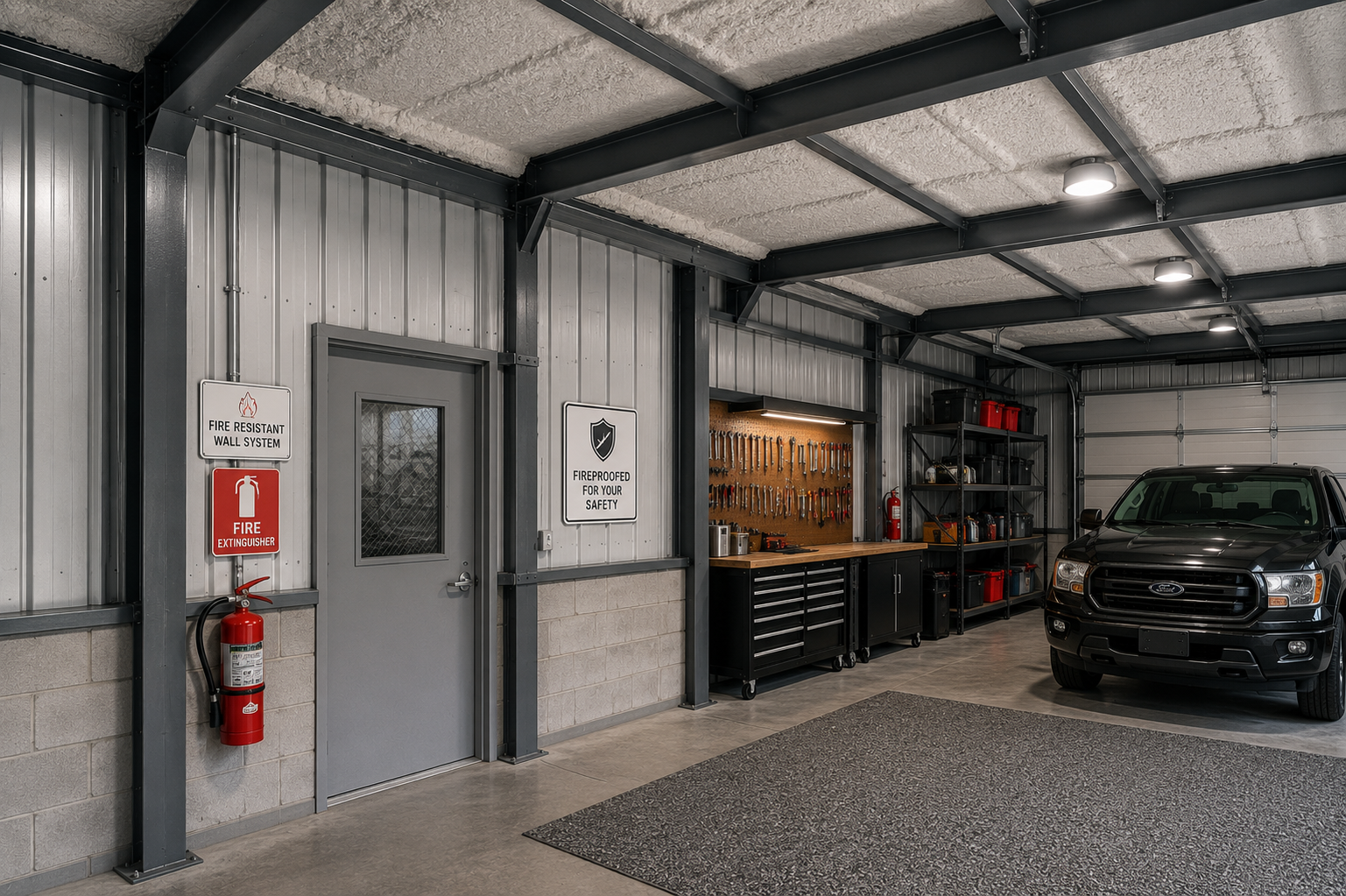
Metal garages are valued by property owners. They are used for vehicle storage, workshops, hobby spaces, and even small-scale commercial operations. While steel structures are often considered fire-resistant, the reality is more nuanced. The metal itself may not burn, but the contents inside can still create serious fire risks. Because of this, fireproofing a metal garage is not simply about construction materials. It is about creating a comprehensive safety strategy.
Insurance companies and local authorities are also placing increasing emphasis on fire safety compliance. Proper fireproofing can reduce insurance premiums and ensure that a structure meets building codes and operational standards. Understanding how to protect a metal garage from fire hazards requires attention to structural design, material selection, equipment installation, and ongoing maintenance. This article explores the practical steps and design considerations needed to transform a standard metal garage into a safer and more compliant environment.
How Do Insurance Companies Evaluate Fire Safety in Metal Garages?
Insurance providers evaluate multiple factors when determining risk levels and coverage terms for metal garages. Structural materials, fire detection systems, insulation types, and electrical installations all play a role. Insurers often look for compliance with local building codes and recognized fire safety standards, as these indicate a lower likelihood of catastrophic loss.
Documentation is also important. Records of fire-resistant materials, inspection reports, and safety system installations can strengthen an insurance application. Some policies offer discounts for fire suppression systems such as sprinklers or monitored alarms. By investing in fireproofing measures, garage owners not only enhance safety but also demonstrate responsibility and preparedness, which insurers tend to reward.
Understanding these expectations helps guide fireproofing decisions. Rather than focusing on minimal compliance, many owners choose to exceed baseline requirements to achieve long-term financial and operational benefits.
What Building Materials Improve Fire Resistance?
Material selection plays a major role in fireproofing a metal garage. While the structural frame is typically steel, interior finishes and insulation can vary widely. Fire-resistant gypsum board, mineral wool insulation, and cement-based panels are commonly used to improve fire performance.
These materials slow heat transfer and reduce flame spread, providing valuable time during an emergency. Fire-rated wall assemblies can create barriers between different areas of the garage, especially if hazardous materials or high-heat equipment are present. Roofing materials also contribute to fire resistance, with certain coatings designed to reflect heat and resist ignition from external sources such as embers.
Choosing materials with certified fire ratings is essential for both safety and insurance documentation. Proper installation ensures that these materials perform as intended, maintaining their protective qualities over time.
How Can Insulation Be Selected Without Increasing Fire Risk?
Insulation improves comfort and energy efficiency, but it must be chosen carefully to avoid creating fire hazards. Some foam insulation products can be combustible if not properly protected by fire-resistant coverings. Mineral wool and fiberglass insulation are often preferred in metal garages because they offer strong fire resistance and do not readily burn.
In addition to the insulation itself, the installation method matters. Gaps or improper sealing can allow flames to spread through hidden cavities. Vapor barriers and protective coverings should be selected with fire safety in mind, ensuring that they meet applicable codes.
Properly insulated metal garages not only maintain stable indoor temperatures but also slow the progression of fire, which can help protect structural elements and provide occupants with more time to evacuate.
How Important Are Fire Barriers and Compartmentalization?
Large open spaces are common in metal garages, especially those used as workshops or storage areas. While openness offers flexibility, it can also allow fires to spread quickly. Fire barriers help contain potential fires within specific zones, reducing damage and improving overall safety.
Walls, ceilings, and doors with fire ratings can divide the garage into functional compartments. Areas that store flammable liquids or house high-heat equipment may benefit from additional separation. Fire-rated doors automatically close when exposed to heat, preventing flames from spreading to adjacent spaces.
Compartmentalization does not necessarily reduce usability. Thoughtful planning can maintain accessibility while still providing effective fire containment, aligning with both safety goals and insurance expectations.
What Role Do Electrical Systems Play in Fire Prevention?
Electrical issues are among the leading causes of garage fires. Improper wiring, overloaded circuits, and damaged equipment can create ignition sources that are difficult to detect until a fire has already started. Fireproofing a metal garage includes ensuring that electrical systems are designed and installed according to professional standards.
Circuit breakers, grounded outlets, and dedicated circuits for high-powered equipment reduce the risk of overheating. Wiring should be protected within conduits or raceways that resist physical damage. Regular inspections and maintenance help identify potential problems before they escalate.
Insurance providers often require proof that electrical installations meet code requirements. Working with licensed electricians not only improves safety but also provides documentation that may be needed during policy reviews or claims.
How Can Fire Detection Systems Improve Safety and Compliance?
Early detection is one of the most effective ways to reduce fire damage and protect occupants. Smoke detectors, heat sensors, and monitored alarm systems provide immediate alerts when a fire begins. In metal garages that house vehicles or machinery, heat detectors may be more suitable than traditional smoke alarms, as they are less prone to false triggers from dust or exhaust.
Integrating alarms with a central monitoring service ensures that emergency responders are notified quickly, even if the building is unoccupied. Visual and audible alerts give occupants clear instructions to evacuate.
Installing certified detection systems demonstrates proactive risk management, which insurers often recognize when assessing coverage. Regular testing and battery replacement are essential to ensure that these systems function reliably.
How Do Fire Suppression Systems Enhance Protection?
While detection systems provide alerts, suppression systems actively control or extinguish fires. Portable fire extinguishers are a basic requirement, but more advanced options such as sprinkler systems offer comprehensive protection.
Sprinklers activate automatically when temperatures reach critical levels, releasing water or specialized agents to slow or stop fire spread. Even partial suppression can significantly reduce structural damage and insurance losses. In garages used for commercial purposes, local regulations may require suppression systems as part of compliance.
Selecting the right suppression approach depends on the garage’s use, size, and contents. Professional design ensures that systems cover key areas and integrate effectively with the building’s layout.
How Should Flammable Materials Be Stored Safely?
Many metal garages contain fuels, solvents, paints, or other flammable materials. Proper storage practices are essential to reduce fire risk. Fireproof cabinets and designated storage areas help isolate these materials from ignition sources and high-traffic zones.
Clear labeling and ventilation further improve safety. Containers should be tightly sealed, and quantities should be limited to what is necessary for regular operations. Keeping flammable items away from electrical panels or heating equipment reduces the likelihood of accidental ignition.
Insurance inspectors often pay close attention to storage practices, as improper handling of hazardous materials significantly increases fire risk. Establishing clear protocols helps maintain compliance and ensures consistent safety practices.
What Maintenance Practices Support Long-Term Fire Safety?
Fireproofing is not a one-time effort. Ongoing maintenance ensures that safety systems remain effective and compliant. Regular inspections of wiring, alarms, extinguishers, and structural components help identify potential issues early.
Cleaning dust and debris reduces the likelihood of ignition, especially in workshops that generate fine particles. Maintaining clear access to exits and safety equipment ensures that occupants can respond quickly in an emergency.
Insurance policies may require periodic inspections or certifications. Keeping detailed maintenance records demonstrates diligence and can simplify the claims process if a fire occurs.
How Do Local Codes and Regulations Influence Fireproofing?
Building codes establish minimum fire safety standards for structures, including metal garages. Requirements vary depending on location, size, and use, but often include provisions for fire-rated materials, exits, and detection systems.
Understanding local regulations is essential before beginning any fireproofing project. Working with professionals who are familiar with regional codes helps ensure compliance and avoid costly revisions. Permits and inspections may be required for certain upgrades, such as installing sprinklers or modifying electrical systems.
Compliance not only enhances safety but also strengthens insurance coverage. Structures that fail to meet code requirements may face limited claims or higher premiums.
How Can Training and Emergency Planning Improve Preparedness?
Even the best-designed fireproofing measures depend on informed occupants. Training on fire extinguisher use, evacuation procedures, and hazard recognition helps individuals respond effectively during emergencies. Clear signage and posted escape routes reinforce awareness.
Emergency plans should account for different scenarios, including electrical fires, vehicle fires, or chemical spills. Regular drills help ensure that occupants remain familiar with procedures and can act calmly under pressure.
Insurance providers often view documented training and emergency planning as indicators of responsible ownership, which may influence coverage terms.
What Are the Financial Benefits of Proper Fireproofing?
While fireproofing requires investment, the long-term financial benefits can be significant. Reduced insurance premiums, lower risk of catastrophic loss, and improved property value all contribute to a strong return on investment. Fire-resistant materials and systems also tend to extend the lifespan of the structure by protecting it from heat-related damage.
In the event of a fire, a well-protected metal garage is more likely to sustain limited damage, allowing for faster recovery and reduced downtime. For businesses operating within garages, this continuity can be critical to maintaining operations and customer trust.
Viewing fireproofing as both a safety measure and a financial strategy helps justify the initial costs and encourages comprehensive implementation.
Conclusion
Fireproofing a metal garage is an essential step toward protecting people, property, and financial investments. Although steel structures provide a strong foundation, they are not immune to fire hazards created by electrical systems, stored materials, and interior finishes. Through careful selection of fire-resistant materials, proper insulation, reliable detection and suppression systems, and consistent maintenance practices, garage owners can significantly reduce risk.
Insurance compliance and building code adherence further reinforce the value of fireproofing, ensuring that the structure meets recognized safety standards. By approaching fireproofing as an ongoing process rather than a one-time upgrade, owners create environments that remain safe, functional, and resilient over time. A thoughtfully fireproofed metal garage not only enhances peace of mind but also supports long-term sustainability, making it a responsible and strategic investment for any property owner.