
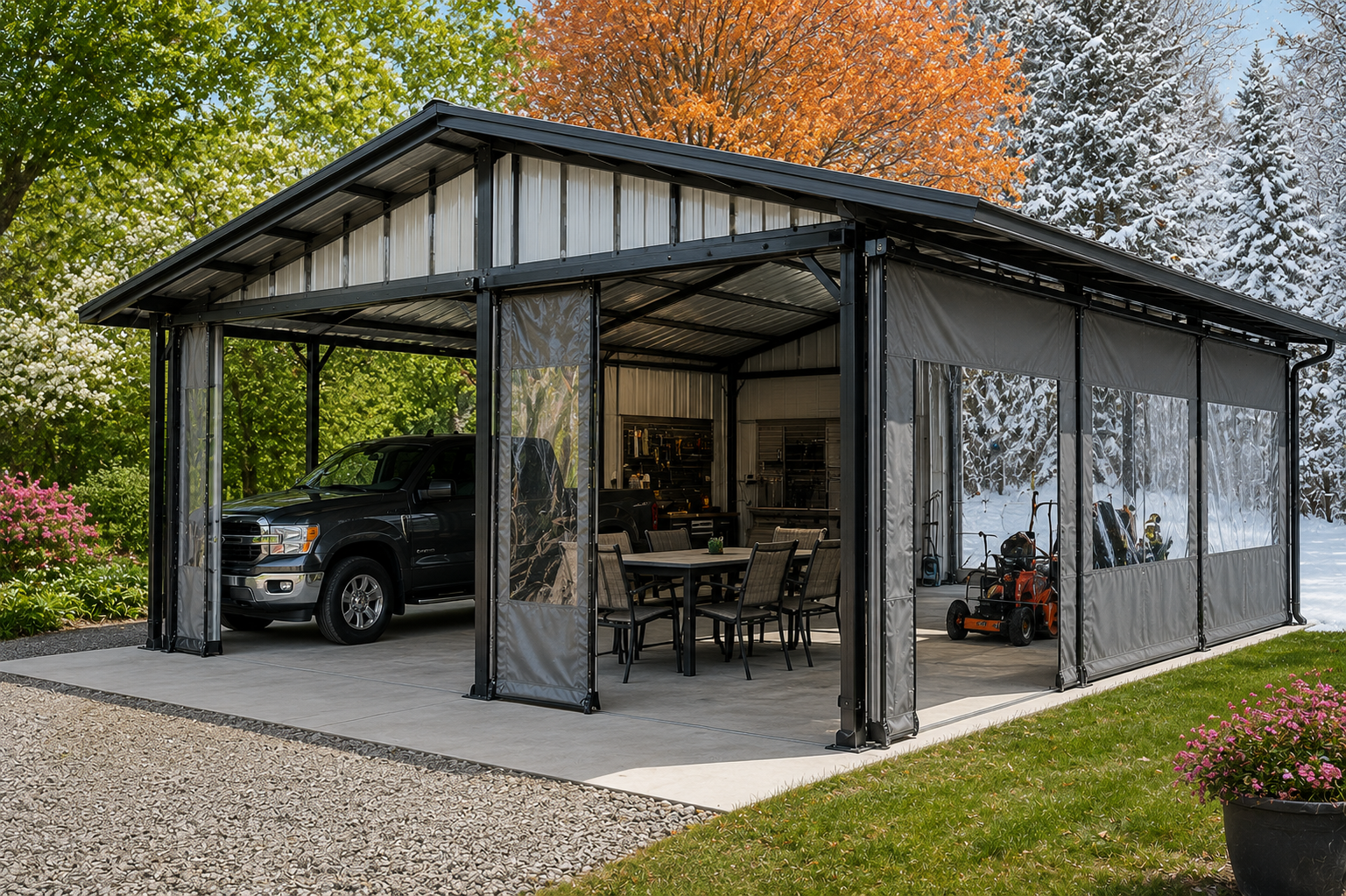
Today, metal carports are flexible outdoor structures that can be adapted for storage, workspaces, recreational areas, and multifunctional environments. One of the most innovative developments in this category is the use of retractable walls. These allow a metal carport to transform according to seasonal needs. By opening walls during warm weather and closing them during colder or storm-prone months, owners can create a dynamic space.
Seasonal adaptation is important as climate patterns shift and property owners look for ways to maximize usable space year-round. Retractable wall systems allow a structure to respond to changing temperatures without requiring permanent alterations. This adaptability enhances comfort while protecting vehicles. Designing a metal carport with retractable walls requires thoughtful consideration of materials, structural support, and operational mechanisms, but the result is a versatile structure capable of serving multiple roles across the year.
Why Are Retractable Walls Becoming Popular in Metal Carport Design?
Retractable walls offer flexibility that fixed-wall structures cannot provide. Traditional carports are open, which allows airflow but exposes vehicles and belongings to seasonal weather. Fully enclosed garages offer protection but may feel restrictive or poorly ventilated during warm months. Retractable walls create a balance by allowing owners to adjust the enclosure level as conditions change.
This flexibility appeals to homeowners and businesses alike. During summer, open walls create a breezy environment that reduces heat buildup and encourages outdoor activity. During rainy seasons or colder months, closed walls provide protection from wind, moisture, and debris. The ability to transition between open and enclosed configurations makes retractable wall carports particularly attractive in regions with varied climates.
Design trends also play a role in their growing popularity. Modern architectural aesthetics emphasize adaptable spaces that serve multiple functions, and retractable walls align perfectly with this philosophy.
How Do Retractable Wall Systems Work in Metal Carports?
Retractable wall systems can be implemented in several ways depending on design goals and budget. Sliding panels move horizontally along tracks, allowing sections of wall to be opened or closed individually. Folding systems use hinged panels that collapse to one side, creating wide openings without requiring complex mechanisms. Roll-up walls, similar to industrial doors or heavy-duty curtains, can be raised to expose the entire side of the carport.
Each system relies on durable hardware that withstands repeated use and exposure to weather. Tracks, rollers, hinges, and locking mechanisms must be corrosion-resistant to ensure long-term performance. Proper alignment is critical to prevent operational issues and maintain structural integrity.
Motorized options are also available, allowing walls to be opened or closed with remote controls or integrated smart systems. These features enhance convenience and allow users to respond quickly to changing weather conditions.
What Materials Are Best for Retractable Walls?
Material selection determines not only the appearance of retractable walls but also their durability and performance. Lightweight aluminum panels are commonly used because they resist corrosion and are easy to operate. Steel panels offer greater strength but may require more robust support systems due to their weight.
Fabric-based retractable walls made from heavy-duty vinyl or weather-resistant textiles provide flexibility and cost efficiency. These materials can be rolled or folded easily and often include transparent sections that allow natural light to enter while maintaining protection from wind and rain.
Polycarbonate or tempered glass panels are sometimes used when visibility and aesthetics are priorities. These materials create a semi-enclosed environment that maintains openness while shielding against the elements. The choice of material should reflect the intended use of the carport and the climate conditions it must withstand.
How Does Structural Design Support Retractable Wall Integration?
Integrating retractable walls into a metal carport requires careful structural planning. The frame must accommodate both open and closed configurations without compromising stability. Steel columns and beams should be designed to support additional loads created by wall systems and track mechanisms.
Wind resistance is a particularly important factor. When walls are closed, they create surfaces that can catch strong winds. Structural reinforcements, anchor systems, and cross bracing help ensure that the carport remains secure during storms. Engineers often analyze wind loads based on local climate data to determine appropriate design specifications.
Roof design also influences retractable wall performance. Overhangs may be added to protect tracks from rain, while drainage systems help prevent water accumulation near wall mechanisms. A well-integrated design ensures that retractable walls operate smoothly while maintaining overall structural integrity.
How Do Retractable Walls Improve Seasonal Comfort?
Seasonal comfort is one of the primary advantages of retractable wall carports. During hot weather, opening the walls promotes airflow and reduces heat buildup, creating a cooler environment for vehicles and occupants. Natural ventilation also minimizes the need for mechanical cooling systems, reducing energy consumption.
In cooler months, closing the walls helps retain warmth and block cold winds. Even without full insulation, the enclosed space can be significantly more comfortable than an open carport. Temporary heating solutions may be used to further enhance usability during winter or rainy seasons.
Adjustable walls allow users to respond quickly to daily weather changes. For example, walls can be partially opened during mild conditions or fully closed during sudden storms. This adaptability makes the carport usable throughout the year rather than only during specific seasons.
What Functional Uses Extend Beyond Vehicle Protection?
Retractable wall carports are highly versatile structures that can serve multiple purposes beyond parking. When walls are open, the space can function as an outdoor workshop, entertainment area, or covered patio. When closed, it can become a storage area, hobby room, or temporary workspace protected from the elements.
Small businesses may use retractable wall carports for seasonal retail displays or service areas that expand during peak months. Farmers and gardeners can use them to protect equipment or create adaptable work zones. The flexibility of retractable walls allows the structure to shift between roles as needs change.
This multifunctional potential increases the value of the investment, turning a simple shelter into a dynamic extension of the property.
How Does Weather Protection Influence Design Choices?
Weather conditions heavily influence the design of retractable wall carports. Regions with heavy rainfall require walls that provide strong water resistance and proper sealing when closed. In areas prone to high winds, reinforced panels and secure locking systems are essential.
Sun exposure also plays a role. UV-resistant coatings help prevent fading and material degradation, while translucent panels allow natural light without excessive heat gain. Snow loads may require stronger framing and steeper roof pitches to prevent accumulation.
Designing for local climate ensures that retractable walls provide effective protection while maintaining ease of operation. Consulting local building codes and climate data helps guide decisions about materials, hardware, and structural reinforcement.
How Can Automation Enhance Retractable Wall Functionality?
Automation adds a layer of convenience and responsiveness to retractable wall systems. Motorized panels can be opened or closed with minimal effort, making it easier to adapt to changing conditions throughout the day. Smart controls may integrate with weather sensors that automatically close walls during rain or high winds.
Remote operation is particularly useful for commercial applications where staff need to adjust the structure quickly. Automation can also improve safety by reducing manual handling of heavy panels or fabric systems.
While automated systems require additional investment and maintenance, they enhance usability and encourage frequent adjustments that maximize the benefits of seasonal adaptation.
What Maintenance Is Required to Keep Retractable Walls Functional?
Regular maintenance ensures that retractable walls operate smoothly and safely over time. Tracks and rollers should be kept clean to prevent debris from causing jams or uneven movement. Hinges and locking mechanisms may require periodic lubrication to maintain reliability.
Fabric-based walls should be inspected for tears or wear, especially after severe weather events. Metal panels may need occasional cleaning and protective coatings to prevent corrosion. Electrical components in motorized systems should be checked regularly to ensure proper operation.
Routine inspections help identify minor issues before they become major problems. Establishing a maintenance schedule prolongs the lifespan of both the walls and the overall carport structure.
How Do Retractable Wall Carports Compare to Traditional Enclosed Garages?
Retractable wall carports occupy a unique middle ground between open carports and fully enclosed garages. They provide flexibility that enclosed garages lack, allowing owners to enjoy open-air conditions without sacrificing protection during unfavorable weather.
Construction costs are often lower than traditional garages because retractable walls can be lighter and require less permanent enclosure. At the same time, they offer greater security and weather protection than open carports. This combination makes them appealing for property owners seeking a balance between functionality and affordability.
Aesthetic considerations also play a role. Retractable walls create a modern, dynamic appearance that aligns with contemporary design trends, making them attractive additions to residential and commercial properties.
How Can Design Enhance Visual Appeal and Integration with Surroundings?
Retractable wall carports can be customized to complement existing architecture and landscaping. Color-matched panels, decorative finishes, and coordinated roofing materials help integrate the structure into the surrounding environment. Transparent or translucent sections allow light to enter while maintaining visual openness.
Landscaping elements such as planters, pathways, and outdoor lighting enhance the overall experience of the space. When walls are open, the carport can blend seamlessly with outdoor living areas. When closed, it can present a clean and modern façade.
Thoughtful design ensures that the carport contributes to property value and curb appeal while maintaining its functional benefits.
What Safety Considerations Should Be Addressed?
Safety is an important aspect of retractable wall design and operation. Panels and mechanisms must be secure to prevent accidental movement during high winds or heavy use. Proper installation of locking systems ensures that walls remain stable when closed.
Clearances should be maintained to avoid pinch points or obstacles during operation. Motorized systems may include sensors that detect obstructions and stop movement automatically. Structural design must account for wind loads created by closed walls to prevent tipping or collapse.
Regular inspections and user training help maintain safe operation, particularly in environments where multiple individuals use the structure.
How Do Retractable Wall Carports Contribute to Sustainable Design?
Retractable wall carports can support sustainability goals by reducing reliance on permanent enclosed structures. Natural ventilation reduces the need for mechanical cooling, while daylighting minimizes energy consumption for lighting. Some designs incorporate solar panels on the roof, further enhancing energy efficiency.
Materials such as recyclable steel and durable fabrics contribute to long-term environmental performance. Adaptability also reduces the need for additional buildings, as a single structure can serve multiple seasonal functions.
By combining flexibility with resource efficiency, retractable wall carports align with sustainable design principles and support environmentally conscious property development.
Conclusion
Metal carports with retractable walls represent a modern approach to seasonal adaptation and multifunctional design. By combining the durability of steel structures with the flexibility of adjustable enclosures, these carports offer year-round usability that responds to changing weather and evolving needs. From improved comfort and weather protection to enhanced aesthetic appeal and sustainability, retractable wall systems transform traditional carports into dynamic spaces capable of serving a wide range of purposes.
Thoughtful design, appropriate material selection, and proper maintenance ensure that retractable wall carports remain safe, reliable, and visually appealing over time. As property owners seek adaptable solutions that maximize space and value, metal carports with retractable walls stand out as innovative structures that blend practicality with modern design.