
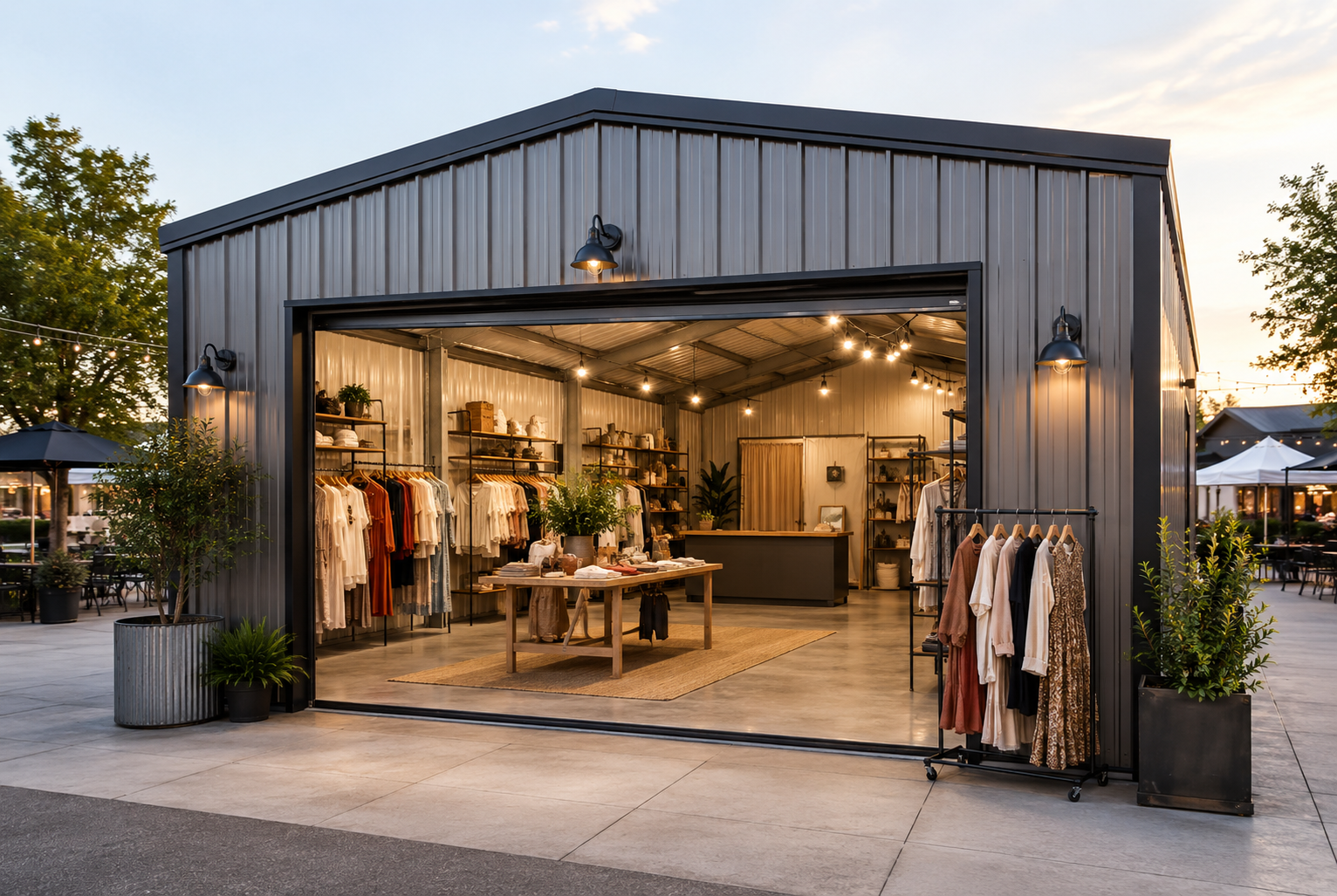
Pop-up retail has transformed how brands connect with customers, and it has generated excitement around products. Temporary retail concepts once relied heavily on rented storefronts, but metal buildings have become a popular alternative. Their flexibility makes them ideal for businesses that want a strong physical presence without the long-term commitments associated with traditional construction. Entrepreneurs are discovering that metal structures can support short-term retail concepts that feel professional.
The rise of experiential retail has also fueled interest in flexible structures. Pop-up spaces need to be visually engaging and capable of adapting to various locations. Metal buildings meet these demands through customizable interiors. These structures provide a reliable framework that can be transformed to suit different retail visions. Understanding how metal buildings function as pop-up retail spaces helps businesses create memorable customer experiences while maintaining operational efficiency.
How Do Metal Buildings Enhance Flexibility in Pop-Up Retail Design?
Flexibility is one of the defining characteristics of successful pop-up retail. Metal buildings provide an adaptable framework that can be customized for different branding themes, product categories, and customer interactions. Interior partitions, movable display units, and adjustable lighting systems can transform a single structure into multiple retail environments over time.
The open floor plan allows retailers to experiment with layouts that guide customers through curated experiences. For example, a fashion brand might create distinct zones for seasonal collections, fitting areas, and interactive installations. Because the structure itself is not limited by fixed interior walls, designers have greater freedom to innovate and adjust displays based on customer feedback or inventory changes.
Exterior customization also contributes to flexibility. Metal buildings can be finished with various cladding materials, paint colors, or graphic wraps that align with brand identity. Large doors or removable panels enable indoor-outdoor integration, allowing retailers to expand their footprint during busy events or favorable weather conditions.
What Are the Key Structural Features That Support Retail Operations?
The structural characteristics of metal buildings make them well-suited for commercial use. High ceilings accommodate lighting fixtures, signage, and creative installations that enhance visual merchandising. Clear-span construction eliminates the need for interior columns, maximizing usable space and allowing retailers to create unobstructed pathways for customers.
Wide door openings facilitate the movement of merchandise, display fixtures, and equipment during setup and teardown. This is particularly valuable for pop-up concepts that frequently change locations or operate seasonally. Reinforced flooring systems support heavy shelving units, point-of-sale counters, and customer traffic without requiring extensive upgrades.
Metal buildings also offer compatibility with modern utilities. Electrical wiring, HVAC systems, and plumbing can be integrated into the structure to support climate control, lighting, and customer amenities. This adaptability ensures that pop-up retail spaces meet both operational and regulatory requirements.
How Can Metal Buildings Be Customized to Reflect Brand Identity?
Branding is central to the success of pop-up retail experiences. Metal buildings provide a neutral canvas that can be transformed through interior design, exterior finishes, and creative signage. Retailers can incorporate vibrant color schemes, textured wall panels, and unique lighting arrangements to create immersive environments that resonate with their target audience.
Exterior customization options include painted facades, branded banners, and architectural accents such as awnings or glass storefront panels. These elements help a temporary structure feel like a polished retail destination rather than a makeshift setup. Interior decor such as wood accents, fabric installations, and digital displays further enhance the atmosphere.
Because metal buildings are structurally strong, they can support large branding elements such as suspended signs or projection screens. This flexibility allows retailers to experiment with bold visual statements that attract attention and create memorable customer experiences.
How Do Metal Buildings Support Rapid Installation and Deployment?
Speed is essential for pop-up retail. Businesses often operate on tight timelines, especially when preparing for seasonal events or product launches. Metal buildings can be prefabricated off-site and assembled quickly at the desired location, reducing construction time and minimizing disruption to surrounding areas.
Modular components allow for efficient transportation and reassembly. Retailers can move their pop-up structure from one event to another without starting from scratch each time. This mobility extends the lifespan of the building and maximizes return on investment.
Quick installation also enables businesses to respond to market opportunities more effectively. A brand can set up a temporary retail presence in a new city or at a major event with relatively short notice, testing customer interest before committing to a permanent storefront.
How Do Metal Buildings Enhance Customer Experience in Pop-Up Retail?
Customer experience is at the heart of successful pop-up retail. Metal buildings provide the structural stability needed to create immersive environments that feel professional and inviting. Spacious interiors allow for comfortable browsing, interactive displays, and event programming such as workshops or live demonstrations.
Climate control systems ensure that customers remain comfortable regardless of weather conditions. Adequate lighting and acoustics enhance the overall ambiance, encouraging visitors to spend more time exploring products. The ability to incorporate windows or glass doors introduces natural light and creates visual connections between the interior and the surrounding environment.
Retailers can design unique pathways that guide customers through storytelling experiences, highlighting brand values and product features. Because metal buildings support flexible layouts, these pathways can evolve to keep the experience fresh and engaging.
What Operational Considerations Are Important for Pop-Up Retail in Metal Buildings?
Operational planning plays a crucial role in ensuring smooth retail operations. Inventory management systems should be integrated into the layout, with designated storage areas that keep merchandise organized and accessible. Point-of-sale stations must be positioned strategically to minimize congestion and maintain efficient customer flow.
Safety measures such as fire exits, emergency lighting, and clear signage are essential for compliance with local regulations. Staff areas for breaks and administrative tasks should be included to support employee well-being. Adequate ventilation and sanitation facilities contribute to a comfortable environment for both customers and staff.
Logistics planning is equally important. Delivery zones, waste disposal systems, and secure storage solutions help maintain cleanliness and operational efficiency. By addressing these considerations during the design phase, retailers can ensure that their pop-up spaces function smoothly from day one.
How Can Metal Buildings Support Seasonal and Event-Based Retail?
Seasonal retail concepts such as holiday markets, summer festivals, and limited-edition product launches benefit from the adaptability of metal buildings. Structures can be decorated to reflect seasonal themes, creating festive environments that attract visitors. Temporary partitions and display fixtures allow retailers to update layouts quickly as inventory changes.
Event-based retail often involves high customer volumes and dynamic programming. Metal buildings provide the durability needed to handle increased foot traffic and the flexibility to host activities such as live performances or product demonstrations. Their ability to expand through connected modules allows retailers to scale up for major events without committing to permanent construction.
When the event concludes, the structure can be dismantled or repurposed for future use. This reusability aligns with the temporary nature of pop-up retail while maintaining a professional appearance.