
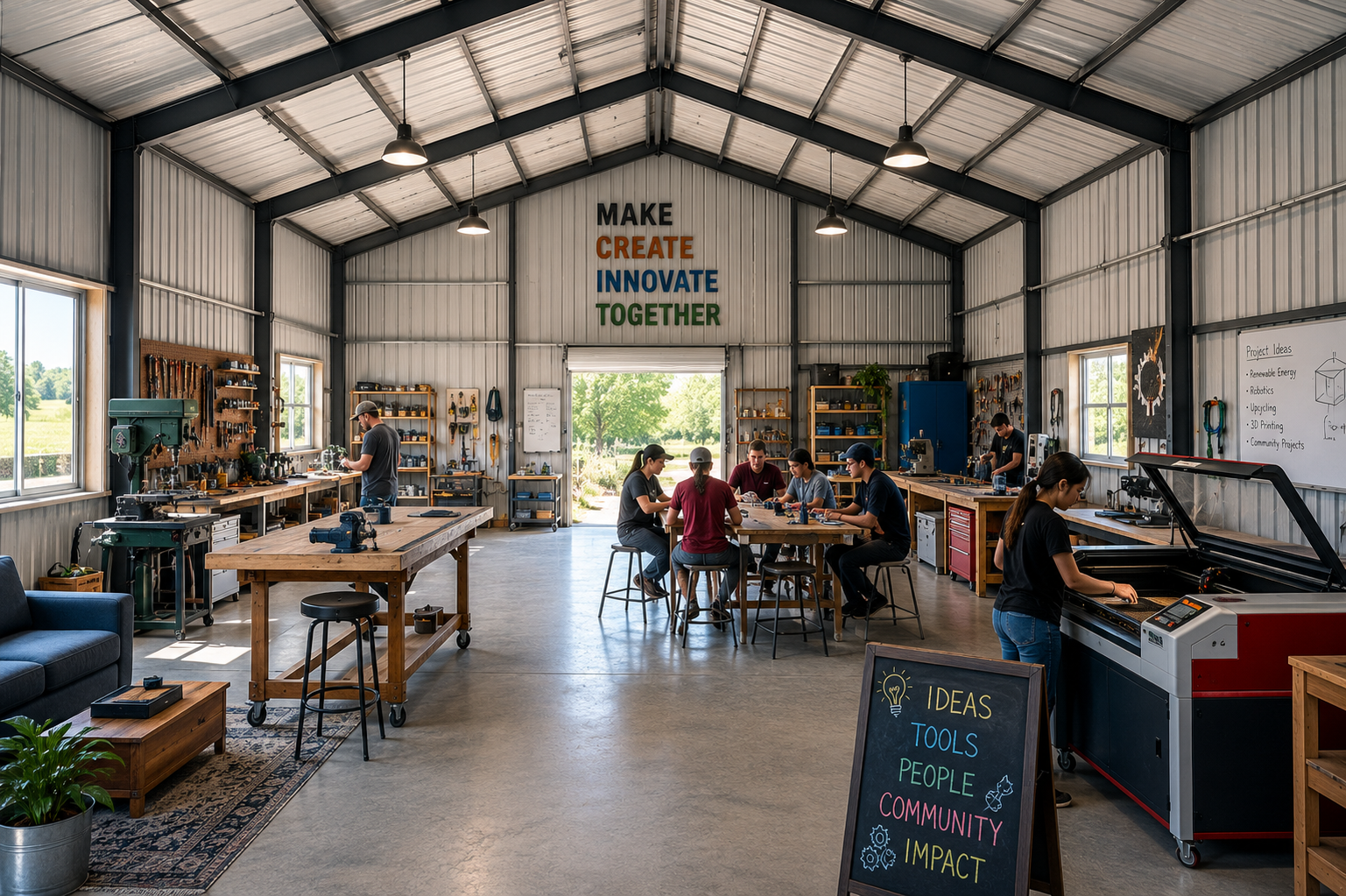
Across towns, communities are searching for flexible spaces where creativity, learning, and collaboration can thrive. Maker spaces have become a powerful response to this need, providing shared environments where people can design, build, prototype, and experiment. While many maker spaces are housed in commercial buildings, metal barns are increasingly being recognized as an alternative. Their structural simplicity makes them well-suited for community-driven innovation.
Metal barns offer more than just shelter. When thoughtfully designed, they can become vibrant centers for hands-on education, entrepreneurship, and collective problem-solving. From woodworking and metal fabrication to digital manufacturing and agricultural innovation, these structures can support a wide range of activities.
How Do Maker Spaces Support Community Innovation?
Maker spaces function as shared platforms where individuals from different backgrounds come together to learn, create, and collaborate. They support innovation by lowering the barriers to experimentation and skill development. Instead of requiring individuals to own expensive tools or dedicate private space, maker spaces pool resources for collective use.
In a community setting, this shared access can spark unexpected collaborations. Artists may work alongside engineers, students alongside retirees, and entrepreneurs alongside hobbyists. These interactions often lead to new ideas, products, and solutions that would not emerge in isolation.
Metal barns, when repurposed as maker spaces, provide the physical foundation for these interactions. Their openness encourages visibility and exchange, reinforcing the social dimension of innovation as much as the technical one.
What Types of Activities Can Metal Barn Maker Spaces Support?
The versatility of metal barns allows them to host a wide range of maker activities. Traditional hands-on crafts such as woodworking, metalworking, and ceramics fit naturally within these structures due to their robust floors and generous clearances. Larger equipment like CNC routers, laser cutters, and welding stations can also be accommodated with proper planning.
Beyond fabrication, metal barn maker spaces can support electronics labs, robotics workshops, and digital design studios. With appropriate zoning and environmental controls, quiet, clean activities can coexist alongside noisier or dust-producing processes. This diversity of functions enhances the value of the space to the community.
Educational programs often flourish in these environments. Classes, training sessions, and mentorship programs can be held within the same structure, allowing learning to flow seamlessly into hands-on application.
How Should Space Be Planned Inside a Metal Barn Maker Space?
Effective space planning is essential to ensure safety, efficiency, and adaptability. While the open nature of a metal barn offers flexibility, it also requires intentional organization. Maker spaces typically benefit from defined zones that separate different types of activities while maintaining visual and physical connectivity.
High-ceiling areas may be reserved for large-scale fabrication or assembly projects, while lower or enclosed sections can house classrooms, offices, or digital labs. Clear circulation paths help users move materials and equipment safely throughout the space.
Flexibility should remain a guiding principle. Movable partitions, modular workstations, and adaptable storage systems allow the layout to change as community needs evolve. The structural simplicity of a metal barn makes these adjustments easier to implement over time.
What Structural Considerations Are Important?
Transforming a metal barn into a maker space introduces structural considerations beyond typical agricultural use. Floor load capacity is a primary concern, as heavy machinery and materials may be present. Concrete slabs may need reinforcement or thickening in specific areas to support concentrated loads.
Roof and wall framing must also accommodate suspended utilities, lighting, and sometimes ventilation or dust collection systems. Steel framing is well-suited for these requirements, but loads should be carefully calculated during design to avoid overloading members.
Vibration and noise transmission can affect both comfort and precision work. Structural detailing that minimizes vibration transfer can improve the performance of sensitive equipment and enhance the overall user experience.
How Can Safety Be Addressed in a Community Maker Space?
Safety is a central concern in any maker space, particularly one that serves a broad community with varying levels of experience. Metal barns provide a strong structural base, but additional measures are required to ensure a safe environment.
Fire safety systems are critical, especially where welding, soldering, or flammable materials are involved. Steel structures offer inherent fire resistance, but sprinklers, alarms, and clear egress routes must still be incorporated. Proper storage for hazardous materials and clear safety signage further reduces risk.
Operational safety depends on training and supervision. Designated tool areas, adequate lighting, and clear separation between active work zones and public areas help prevent accidents. The openness of a metal barn can support oversight and peer learning, reinforcing a culture of safety.
How Does Environmental Comfort Affect Innovation?
Comfort has a direct impact on creativity and productivity. Maker spaces that are too hot, cold, noisy, or poorly lit can discourage use and limit participation. Metal barns, if left uninsulated, can be prone to temperature extremes, making environmental control a key design consideration.
Insulation and air sealing help stabilize indoor conditions and reduce energy consumption. Heating and cooling systems should be sized to accommodate both occupancy and equipment-generated heat. Ventilation is especially important for managing dust, fumes, and odors produced by maker activities.
Lighting deserves special attention. Natural light can enhance mood and reduce energy costs, while well-designed artificial lighting supports precision work. Metal barns can be outfitted with skylights, translucent panels, or high-efficiency fixtures to create a bright, inviting environment.
How Can Metal Barns Support Digital and Traditional Making Together?
One of the strengths of maker spaces is the blending of traditional craftsmanship with modern digital tools. Metal barns can support this hybrid approach by offering enough space and structural capacity to house diverse equipment side by side.
Digital fabrication tools often require clean, controlled environments, while traditional tools may generate dust or noise. Thoughtful zoning and localized environmental controls allow these activities to coexist without interference. This integration encourages cross-disciplinary learning and innovation.
The physical proximity of different tools and skills fosters experimentation. A concept developed on a computer can be quickly prototyped using digital machinery, then refined through hands-on craftsmanship. Metal barns provide the spatial flexibility needed to support this iterative process.
What Role Do Utilities Play in Maker Space Design?
Utilities form the backbone of any functional maker space. Electrical capacity must support a wide range of tools, from small electronics benches to high-powered industrial equipment. Metal barns can be designed with robust electrical infrastructure, including multiple circuits and expandable panels.
Plumbing may be required for sinks, wash stations, or specialized processes. Compressed air, data networks, and dust collection systems also play important roles. Routing these utilities in a metal barn requires coordination to maintain structural integrity and accessibility.
Future expansion should be considered from the outset. Installing extra conduit, capacity, or connection points during initial construction can save time and cost as the maker space grows and evolves.
How Can Metal Barn Maker Spaces Be Inclusive?
Inclusivity is a defining value of community maker spaces. Designing metal barns with accessibility in mind ensures that people of all abilities can participate. This includes providing accessible entrances, clear pathways, and appropriately designed workstations.
Programmatic inclusivity is equally important. Spaces should feel welcoming to beginners as well as experienced makers. Clear signage, shared work areas, and visible examples of community projects help lower intimidation barriers.
Metal barns, with their neutral and adaptable interiors, can be customized to reflect local culture and identity. Murals, displays, and community-built furnishings can transform the space into a shared expression of creativity.
How Do Maker Spaces in Metal Barns Support Education?
Education is a natural extension of maker space activity. Metal barn maker spaces can host workshops, classes, and mentorship programs that serve students, adults, and seniors alike. The hands-on environment reinforces learning through direct experience.
Schools and universities may partner with community maker spaces to provide real-world learning opportunities. Metal barns provide ample space for group instruction alongside individual work, supporting both formal and informal education.
By exposing participants to tools, technologies, and collaborative practices, these spaces help build skills that are relevant to modern economies. This educational impact strengthens the case for community investment in metal barn maker spaces.
How Can Metal Barn Maker Spaces Foster Entrepreneurship?
Entrepreneurship often begins with access to tools and space to experiment. Metal barn maker spaces can serve as incubators for small businesses, artisans, and inventors who need affordable environments to develop products.
Shared resources reduce startup costs, allowing entrepreneurs to test ideas before committing to dedicated facilities. The collaborative atmosphere also provides informal networking and feedback opportunities, which can accelerate development.
Some maker spaces evolve to include small-scale production or retail components. Metal barns can accommodate these functions with appropriate zoning and code compliance, supporting local economic development.
What Are the Zoning and Code Considerations?
Zoning and building codes influence how metal barns can be used as maker spaces. Occupancy classifications, fire ratings, and accessibility requirements must be addressed during design and renovation. Community maker spaces often fall under assembly or educational categories, which carry specific code obligations.
Local zoning regulations may affect noise levels, operating hours, and parking. Engaging with local authorities early in the planning process helps identify constraints and opportunities. Metal barns are generally adaptable to code requirements, but compliance must be carefully managed.
Clear documentation and professional design support reduce the risk of delays and ensure that the maker space operates safely and legally.
How Can Sustainability Be Integrated Into Metal Barn Maker Spaces?
Sustainability aligns naturally with the ethos of maker culture, which values reuse, repair, and innovation. Metal barns themselves are durable and recyclable, making them a relatively sustainable building choice. Additional strategies can further enhance environmental performance.
Energy-efficient insulation, lighting, and mechanical systems reduce operating costs and environmental impact. Solar panels or rainwater collection systems can be integrated into metal barn designs to support sustainability goals.
Maker spaces can also promote sustainable practices through programming, encouraging participants to upcycle materials or develop environmentally focused projects. The building becomes both a tool and a teaching resource.
How Do Metal Barn Maker Spaces Build Community Identity?
Community maker spaces often become landmarks that reflect local identity and values. Metal barns, with their simple forms, can be customized to tell a community’s story through design and use. Exterior treatments, signage, and landscaping help integrate the building into its context.
Inside, the projects created by members become part of the environment. Displays of finished work, collaborative installations, and evolving layouts give the space a sense of shared ownership. This visibility reinforces pride and engagement.
By hosting events, exhibitions, and open houses, metal barn maker spaces can extend their influence beyond regular users, strengthening community connections.
What Makes a Metal Barn Maker Space Successful?
Success depends on more than the building itself. Governance, programming, and community engagement all play critical roles. However, the physical environment sets the stage for these elements to flourish.
Metal barns provide the flexibility, durability, and affordability needed to support diverse activities and changing needs. When combined with thoughtful design and inclusive management, they can become powerful engines of community innovation.
Ongoing evaluation and adaptation help ensure long-term relevance. As technologies and interests evolve, the space can adapt with them, supported by the metal barn structure’s adaptability.
Conclusion
Metal barns offer a compelling foundation for community maker spaces, blending practicality with creative potential. Their open layouts, structural strength, and cost efficiency make them well-suited to support hands-on innovation, education, and collaboration. When thoughtfully designed, these structures can host a wide range of activities while remaining adaptable to future needs.
By transforming metal barns into maker spaces, communities create accessible environments where ideas can be explored, skills can be shared, and innovation can thrive. These spaces do more than house tools and projects; they cultivate connections, empower individuals, and contribute to resilient local economies. In this way, metal barns become more than buildings, evolving into hubs of creativity and collective progress.