
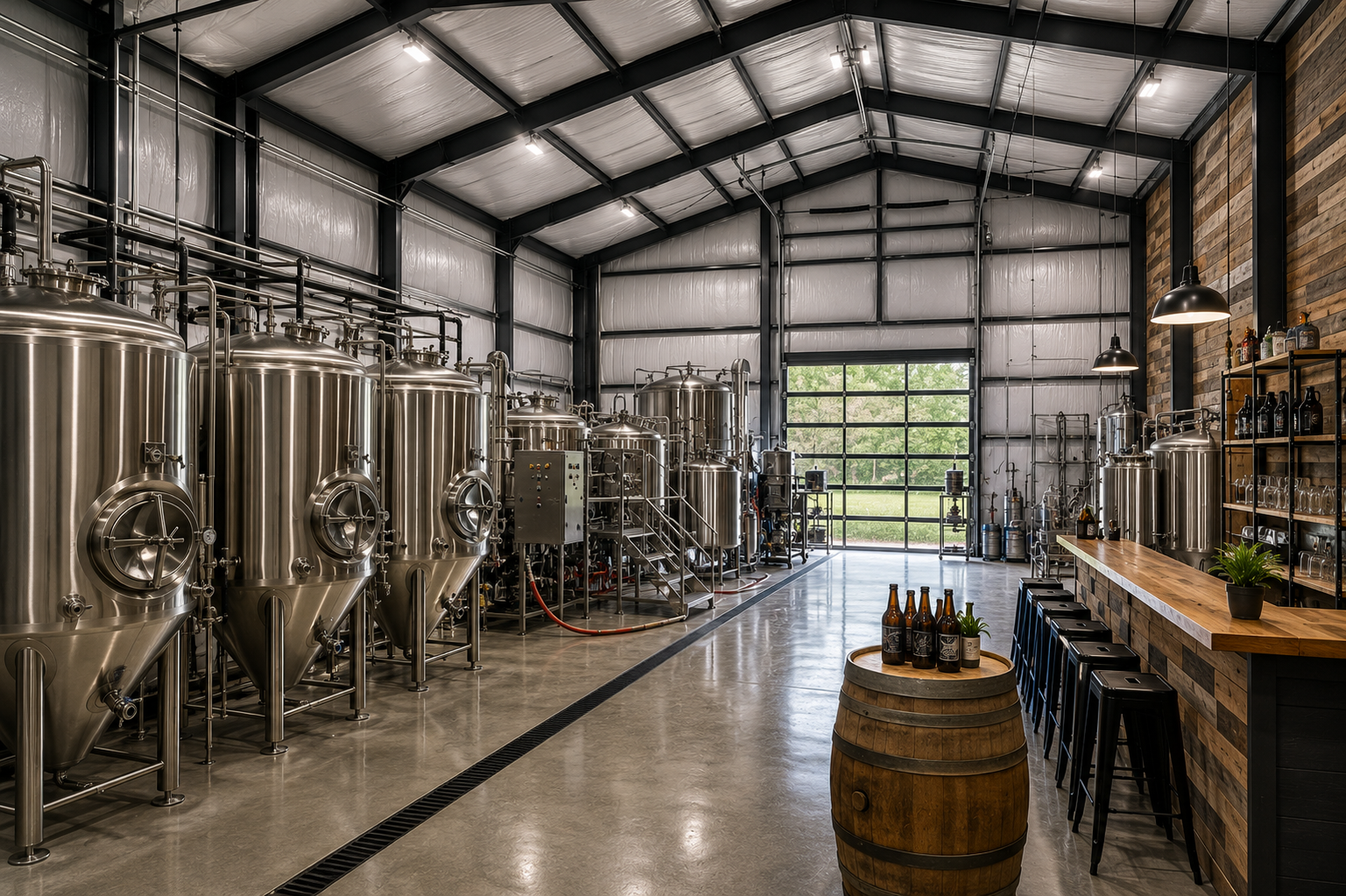
The craft brewing industry has grown rapidly over the past decade. As breweries expand from small experimental operations into full production environments, the need for reliable infrastructure becomes increasingly important. Insulated steel structures have emerged as a practical and flexible solution. They offer strength that supports heavy brewing equipment while maintaining the temperature stability essential for brewing processes. These structures combine modern engineering with adaptability, making them suitable for both startup breweries and established producers looking to scale.
Brewing is both a science and an art. The physical environment plays a major role in product quality. Breweries require buildings that can maintain consistent conditions despite changing weather. Insulated steel structures provide strong thermal performance. They can accommodate brewing tanks, tasting rooms, packaging areas, and cold storage while also reflecting the brand identity that craft breweries value. Understanding how insulation and steel construction work together is key to designing facilities that support growth, safety, and innovation.
Why Are Steel Structures Becoming Popular for Craft Breweries?
Steel structures have gained popularity in the craft brewing industry because they offer a combination of strength, affordability, and flexibility. Brewing equipment is often large and heavy, including fermentation tanks, mash tuns, and storage vessels that require strong structural support. Steel framing provides the load-bearing capacity necessary to house this equipment without extensive interior columns, creating open spaces that simplify workflow and equipment placement.
Construction speed is another advantage. Steel components are often prefabricated, allowing breweries to reduce build times and begin operations sooner. This efficiency is particularly valuable for startups that need to generate revenue quickly. Steel structures also offer long-term durability, resisting pests, moisture damage, and structural deterioration that can occur in other building types.
In addition to practical benefits, steel structures can be customized to reflect a brewery’s branding and aesthetic vision. Modern finishes, architectural accents, and integrated signage allow breweries to create inviting spaces that appeal to customers and reinforce their identity.
How Does Insulation Improve Brewing Conditions?
Brewing relies heavily on precise temperature control, especially during fermentation and conditioning stages. Insulation plays a crucial role in maintaining stable indoor environments that protect product quality. Insulated steel structures reduce temperature fluctuations caused by external weather changes, helping brewers maintain consistent production processes.
Effective insulation also enhances energy efficiency by reducing the need for excessive heating or cooling. Brewing operations generate significant heat from equipment and processes, and insulation helps manage internal temperatures without excessive energy use. In cold climates, insulation prevents heat loss and protects plumbing systems from freezing, while in warmer regions, it helps keep interior spaces comfortable for staff and customers.
Sound insulation is another benefit. Brewing equipment can be noisy, and insulated walls and ceilings help reduce sound transmission to surrounding areas, improving the working environment and maintaining good relations with neighboring properties.
What Types of Insulation Work Best in Steel Breweries?
Several insulation options are suitable for steel brewery structures, each offering specific advantages. Rigid foam panels provide strong thermal resistance and are commonly used in walls and roofs. Spray foam insulation offers excellent air sealing and can be applied to irregular surfaces, improving overall energy performance.
Mineral wool insulation is valued for its fire resistance and moisture tolerance, making it well-suited for brewery environments where steam and water are present. Insulated metal panels combine structural cladding with integrated insulation, simplifying installation and creating a clean, modern appearance.
Choosing the right insulation depends on climate, budget, and operational needs. Moisture resistance is especially important in breweries, as condensation and humidity are common. Proper vapor barriers and ventilation strategies ensure that insulation maintains its performance over time.
How Do Steel Structures Support Brewing Equipment Loads?
Brewing facilities must accommodate heavy equipment and dynamic loads created by liquid movement and production processes. Steel structures provide strong load-bearing capacity and can be engineered to support large tanks and elevated platforms. Reinforced concrete slabs are often paired with steel framing to handle concentrated loads from filled vessels.
Clear-span construction allows brewers to arrange equipment efficiently without interference from interior columns. This flexibility is particularly useful when expanding production capacity or reconfiguring workflows. Overhead cranes or hoists may also be integrated into steel framing, assisting with equipment installation and maintenance.
Structural engineers typically evaluate load requirements during design to ensure safety and compliance with building codes. Proper planning helps avoid costly modifications later and ensures that the facility can accommodate future growth.
How Can Insulated Steel Structures Enhance Energy Efficiency?
Energy consumption is a major operational cost for craft breweries. Insulated steel buildings contribute to energy efficiency by reducing heat transfer through walls and roofs. High-performance insulation, combined with reflective roofing materials and airtight construction, minimizes energy loss.
Efficient lighting systems and natural daylighting strategies can further reduce energy use. Skylights or translucent panels allow natural light into production and tasting areas, creating a welcoming atmosphere while lowering electricity consumption. Solar panels may also be integrated into steel roofs, supporting renewable energy initiatives.
Efficient HVAC systems designed specifically for brewery environments help maintain consistent temperatures without excessive energy expenditure. Insulated structures make these systems more effective by reducing external influences on indoor conditions.
How Do Insulated Steel Buildings Support Sanitation Requirements?
Sanitation is a top priority in brewing operations, as cleanliness directly impacts product quality and safety. Steel structures with insulated wall panels create smooth, nonporous surfaces that are easy to clean and resistant to mold and bacteria growth. This is particularly important in areas where spills and moisture are common.
Proper drainage and washable surfaces allow staff to maintain hygiene standards without damaging building materials. Insulated panels can be sealed to prevent water infiltration, reducing the risk of hidden moisture problems that could compromise structural integrity.
Temperature control provided by insulation also helps maintain safe storage conditions for ingredients and finished products. Consistent environments reduce the likelihood of contamination and support compliance with food safety regulations.
How Can Insulated Steel Structures Accommodate Tasting Rooms and Public Areas?
Many craft breweries include tasting rooms or retail spaces that welcome customers into the production environment. Insulated steel structures can be designed to balance industrial functionality with customer comfort. Separate zones may be created for production and public use, each with appropriate climate control and acoustics.
Architectural finishes such as wood accents, glass partitions, and decorative lighting help create inviting interiors while retaining the structural efficiency of steel construction. Insulated walls help maintain comfortable temperatures for visitors, enhancing the overall experience.
Flexible layouts allow breweries to host events, tours, and educational programs. By integrating public spaces into the initial design, breweries can create cohesive environments that support both production and community engagement.
How Does Ventilation Work in Insulated Brewery Structures?
Brewing processes generate heat, steam, and carbon dioxide, making proper ventilation essential. Insulated steel structures must incorporate ventilation systems that remove excess heat and moisture while maintaining stable indoor temperatures. Exhaust hoods, ceiling fans, and air exchange systems help manage air quality.
Fermentation areas may require specialized ventilation to handle gas buildup safely. Insulation works in conjunction with ventilation by preventing unwanted heat gain or loss, ensuring that air handling systems operate efficiently.
Balancing ventilation and insulation is crucial. Over-ventilation can waste energy, while insufficient airflow can create hazardous conditions. Careful design ensures that both systems work together to support safe and efficient brewing operations.
How Do Insulated Steel Breweries Address Moisture and Condensation?
Moisture management is a key concern in breweries due to frequent washing, steam production, and liquid handling. Insulated steel structures must be designed to prevent condensation, which can lead to corrosion or microbial growth. Vapor barriers and thermal breaks reduce the likelihood of moisture forming on cold surfaces.
Proper drainage systems direct water away from structural components, while sealed insulation prevents water infiltration. Insulated panels with protective coatings resist rust and maintain structural integrity even in humid environments.
Regular inspections and maintenance help ensure that moisture control measures remain effective over time. Addressing these issues during design reduces long-term repair costs and protects the building’s performance.
How Can Insulated Steel Breweries Support Expansion and Scalability?
One of the greatest advantages of steel construction is its adaptability. Insulated steel structures can be expanded by adding new bays or extending existing sections. This flexibility allows breweries to increase production capacity without relocating or disrupting operations.
Interior layouts can also be reconfigured as equipment changes or new processes are introduced. Modular insulation panels make it easier to modify walls or create new zones within the building. Planning for scalability during initial design ensures that the structure can evolve alongside the business.
Expansion-friendly design reduces long-term costs and supports sustainable growth, making insulated steel buildings a strategic choice for ambitious breweries.
How Do Insulated Steel Structures Contribute to Sustainability?
Sustainability is an important consideration for many craft breweries, which often emphasize local sourcing and environmentally responsible practices. Steel is highly recyclable, and insulated steel structures can incorporate energy-efficient systems that reduce environmental impact.
Insulation reduces energy consumption for heating and cooling, while efficient lighting and renewable energy integration further improve sustainability. Rainwater harvesting systems and efficient water management strategies can also be incorporated into steel building designs.
Durability is another sustainability factor. Long-lasting structures require fewer repairs and replacements, reducing resource use over time. By combining efficiency and resilience, insulated steel buildings align with the eco-conscious values many breweries embrace.
How Can Aesthetic Design Reflect Brewery Identity?
While functionality is critical, aesthetics play a major role in the craft brewing experience. Insulated steel structures can be customized with architectural elements that reflect a brewery’s personality and brand. Exterior finishes, color schemes, and signage help create a distinctive presence.
Interior design choices such as exposed steel beams, industrial lighting, and decorative wall treatments contribute to a welcoming atmosphere. Insulated panels can be finished with textures or patterns that enhance visual appeal while maintaining performance.
A well-designed facility not only supports production but also strengthens marketing and customer engagement. Visitors often associate the physical environment with the quality and character of the beer itself.
Conclusion
Insulated steel structures provide a powerful combination of durability, flexibility, and efficiency for craft breweries. By supporting heavy equipment, maintaining stable temperatures, and enhancing energy performance, these buildings create environments where brewing processes can thrive. Thoughtful design ensures that sanitation, ventilation, and moisture control are effectively managed, protecting both product quality and structural integrity.
Beyond production, insulated steel buildings can accommodate tasting rooms, events, and community engagement, reflecting the creative spirit that defines craft brewing. Their adaptability allows breweries to grow and evolve without sacrificing efficiency or safety. As the craft beer industry continues to expand, insulated steel structures offer a practical and forward-thinking solution that balances operational demands with sustainability and design innovation.