
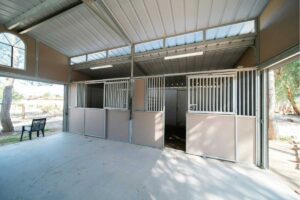
Equestrian facilities demand a rare balance of strength, safety, comfort, and adaptability. Horses are powerful animals with sensitive physical needs. The structures that house them must withstand daily wear while supporting health and performance. As equestrian operations grow more sophisticated, building materials and design strategies play a critical role in long term success.
Steel construction has emerged as a leading solution for modern equestrian facilities. Its durability, flexibility, and design efficiency make it well-suited for stables, riding arenas, breeding barns, and support spaces. When thoughtfully planned, steel buildings create environments that protect horses, streamline operations, and adapt to evolving equestrian disciplines.
Why Is Steel a Strong Choice for Equestrian Facilities?
Steel offers exceptional structural integrity, which is essential in environments where animals exert significant force on walls, doors, and partitions. Horses can kick, lean, and push against surfaces, and steel framing resists deformation better than many traditional materials. This strength translates into longer building life and reduced repair costs.
Steel buildings are also resistant to pests, rot, and moisture damage. In barn environments where humidity, manure, and cleaning routines are constant, this resistance is invaluable. Steel does not warp or decay, helping facilities maintain consistent performance over time.
Another advantage lies in design flexibility. Steel structures can be customized to accommodate various equestrian uses, from compact private barns to expansive riding complexes. Clear span designs allow large open spaces without interior supports, which is particularly beneficial for arenas and training halls.
How Do Steel Buildings Support Horse Safety and Welfare?
Horse welfare begins with a safe physical environment. Steel equestrian facilities can be designed with smooth interior surfaces, rounded edges, and protected structural elements that minimize injury risk. Properly finished steel components prevent sharp edges and reduce the likelihood of cuts or abrasions.
Ventilation and climate control are easier to integrate into steel buildings, supporting respiratory health and comfort. Horses are sensitive to air quality, and steel structures allow precise placement of vents, fans, and insulation systems to regulate temperature and airflow.
The predictability of steel construction also supports consistent stall dimensions and spacing. Uniform layouts help reduce stress by creating orderly, familiar environments for horses, which contributes to calmer behavior and better overall well-being.
What Types of Equestrian Facilities Can Be Built with Steel?
Steel construction supports a wide range of equestrian facilities. Horse barns and stables are the most common applications, housing stalls, tack rooms, feed storage, and wash areas. Riding arenas, both indoor and covered, benefit from steel’s ability to span large widths without interior columns.
Training centers often combine multiple functions under one roof, including arenas, classrooms, offices, and viewing areas. Steel buildings can accommodate these mixed-use requirements efficiently. Breeding facilities, veterinary support spaces, and rehabilitation centers also benefit from steel’s adaptability.
Because steel buildings can be expanded or modified, they suit facilities that anticipate growth or changing disciplines, such as adding new training programs or increasing boarding capacity.
How Should Stall Layouts Be Designed in Steel Barns?
Stall design directly affects horse comfort and safety. Steel barns allow precise control over stall dimensions, ensuring adequate space for movement, rest, and feeding. Proper stall size reduces stress and supports healthy posture and circulation.
Ventilation openings can be positioned to provide fresh air without drafts. Steel framing supports secure stall partitions that resist kicking while allowing visibility and social interaction between horses. Doors and latches can be reinforced to withstand repeated use.
Flooring systems in steel barns can be customized with rubber mats, compacted base layers, or specialized surfaces that provide traction and cushioning. Proper drainage beneath stalls helps manage moisture and maintain hygiene.
How Do Steel Structures Improve Indoor Riding Arenas?
Indoor riding arenas demand large, unobstructed spaces to allow safe riding patterns and jumping courses. Steel clear span construction excels in this application by eliminating interior columns that could interfere with movement or pose hazards.
Roof heights can be tailored to discipline requirements, accommodating dressage, jumping, or western riding. Steel framing supports lighting systems that evenly illuminate the arena, improving visibility for riders and trainers.
Climate control systems can be integrated to extend riding seasons and protect footing quality. Steel buildings support insulation and ventilation strategies that stabilize temperatures and reduce condensation, preserving arena surfaces and equipment.
What Role Does Ventilation Play in Steel Equestrian Facilities?
Ventilation is essential for maintaining healthy air quality in horse facilities. Steel buildings allow designers to incorporate ridge vents, sidewall openings, and mechanical ventilation systems that promote continuous air exchange.
Proper ventilation removes ammonia, dust, and moisture that can accumulate from bedding and manure. Reducing airborne irritants helps prevent respiratory issues and improves overall comfort for horses and staff.
Steel structures also support adjustable ventilation solutions. Openings can be designed to respond to seasonal changes, allowing facilities to balance airflow with temperature control throughout the year.
How Is Temperature Managed in Steel Horse Facilities?
Horses tolerate a range of temperatures, but extreme heat or cold can affect performance and health. Steel buildings can be insulated to reduce heat transfer and stabilize interior conditions. Roof and wall insulation minimizes temperature swings and prevents condensation.
Heating systems are often used in tack rooms, offices, and wash bays, while arenas and barns may rely on passive temperature management supported by ventilation. In warmer climates, steel buildings can incorporate reflective roofing and shading elements to reduce heat gain.
Effective temperature management protects horses from stress while creating comfortable working conditions for riders and staff.
How Does Steel Construction Support Fire Safety?
Fire safety is a critical concern in equestrian facilities due to the presence of hay, bedding, and equipment. Steel is non-combustible, which significantly reduces the risk of structural fire spread compared to wood framing.
Steel buildings can be designed with fire-rated walls, compartmentalized storage areas, and dedicated ventilation to reduce fire hazards. Electrical systems can be installed with protective conduits and proper spacing to minimize risk.
These features contribute to safer environments and provide peace of mind for facility owners and horse caretakers.
What Flooring Systems Work Best in Steel Equestrian Buildings?
Flooring requirements vary by area within an equestrian facility. Stalls require cushioning and drainage, while aisles need durable, slip-resistant surfaces. Steel buildings support a wide range of flooring systems tailored to each function.
Concrete slabs are commonly used for aisles and wash areas due to their durability and ease of cleaning. Rubber mats or pavers improve traction and comfort. Arenas rely on specialized footing systems layered over stable bases supported by steel framing.
Proper flooring reduces injury risk, improves hygiene, and supports efficient maintenance routines.
How Can Steel Facilities Improve Daily Operations?
Efficiency is essential in equestrian operations, where daily routines include feeding, cleaning, training, and care. Steel building layouts can be optimized to streamline workflows, reducing travel distance and handling time.
Wide aisles, clear sightlines, and centralized storage improve movement and supervision. Steel structures support the integration of automated systems such as watering, lighting, and ventilation controls.
These operational improvements reduce labor demands and enhance consistency in horse care.
How Do Steel Buildings Support Long-Term Adaptability?
Equestrian disciplines and business models evolve. Steel buildings are inherently adaptable, allowing owners to reconfigure interior spaces or expand facilities as needs change. Additional stalls, arenas, or support spaces can be added without major disruption.
Modular design principles allow phased development, which is especially valuable for growing operations. Structural capacity can be planned to accommodate future upgrades, such as additional lighting or equipment.
This adaptability protects investment value and ensures facilities remain relevant for decades.
What Are the Maintenance Advantages of Steel Equestrian Facilities?
Steel buildings require less maintenance than many traditional structures. They resist pests, moisture damage, and warping, which are common challenges in barn environments. Exterior finishes are designed to withstand weather exposure with minimal upkeep.
Interior steel components are easy to clean and sanitize, supporting hygiene standards. Reduced maintenance demands allow owners to focus resources on horse care and facility improvement rather than constant repairs.
Long-term durability translates into predictable operating costs and extended building lifespan.
How Do Steel Equestrian Facilities Enhance Aesthetic Appeal?
Modern steel buildings offer a wide range of design options that complement rural and equestrian aesthetics. Exterior finishes can mimic traditional barn appearances or embrace contemporary styles. Rooflines, colors, and architectural details can be customized.
Interior spaces can be finished with wood accents, natural lighting, and thoughtful layouts that create warm, welcoming environments. Steel structures provide the framework for both functional efficiency and visual appeal.
Attractive facilities enhance reputation and appeal to clients, riders, and visitors.
How Can Steel Buildings Support Sustainable Equestrian Design?
Sustainability is increasingly important in equestrian facility planning. Steel is recyclable and often contains recycled content. Energy-efficient insulation, lighting, and ventilation systems reduce environmental impact.
Steel buildings support renewable energy integration, such as solar panels, due to their structural strength. Water management systems can be incorporated to support wash areas and landscape irrigation.
These features align equestrian operations with responsible land stewardship and long-term sustainability goals.
Conclusion
Steel construction offers a durable, adaptable, and welfare-focused solution for equestrian facilities. Its strength and flexibility support the unique demands of horse care, training, and management while providing long-term value for owners. From safe stall design to expansive indoor arenas, steel buildings create environments where horses and people can thrive.
As equestrian operations continue to evolve, steel facilities provide the foundation for growth, efficiency, and innovation. With thoughtful design and attention to horse welfare, steel equestrian buildings represent a forward-looking investment in durability, safety, and performance.